
How to Fix Lockjaw: What It Is and When to Get Help
A jaw that will not open or close is not always the same problem, and some causes need urgent care rather than a home fix.

- Lockjaw is a symptom, not a diagnosis. A jaw that will not fully open or close can come from a stuck jaw-joint disc, a muscle spasm, an infection, or rarely tetanus, and these are not fixed the same way.
- The most common cause of a jaw that will not open past a couple of finger-widths is a displaced joint disc, called a closed lock. This is a joint problem you cannot reliably force open at home.
- Genuine muscle-spasm tightness can sometimes ease with gentle warmth and rest, but forcing a stuck joint can make things worse.
- Some lockjaw is a real emergency. A jaw locked open, lockjaw after a head or jaw injury, or stiffness with fever, swelling, or trouble swallowing needs urgent medical or dental care.
- The safe path is to tell the causes apart, avoid forcing anything, and get a professional to look, rather than to rely on an internet trick to fix it.
You cannot reliably fix true lockjaw with a single home move, because it has several causes: a stuck jaw-joint disc, a muscle spasm, an infection, or rarely tetanus. Gentle warmth and rest may ease muscular tightness, but a jaw that locks open, follows an injury, or comes with fever or swelling needs urgent care.
What lockjaw actually is
Lockjaw simply means the jaw will not open or close the way it should. Behind that one word sit two very different machineries: the joint and the muscles. In the joint, a small cushioning disc sits between the ball and socket and normally glides with it. When that disc slips forward and stays there, it physically blocks the joint from opening fully, a state clinicians call disc displacement without reduction, or a closed lock. Disorders of this joint are common: around 31% of adults have a sign or symptom of a temporomandibular disorder, and disc problems are the most frequent joint type. In the muscles, the jaw-closing muscles can seize into sustained spasm or become stiff and restricted, a state called trismus, after heavy clenching, an injury, dental work, or a nearby infection. And rarely, lockjaw is the classic early sign of tetanus, in which a bacterial toxin causes spreading muscle rigidity, which is a medical emergency. The same word covers all of these, but the right response for each is completely different, which is exactly why guessing at a fix is risky.
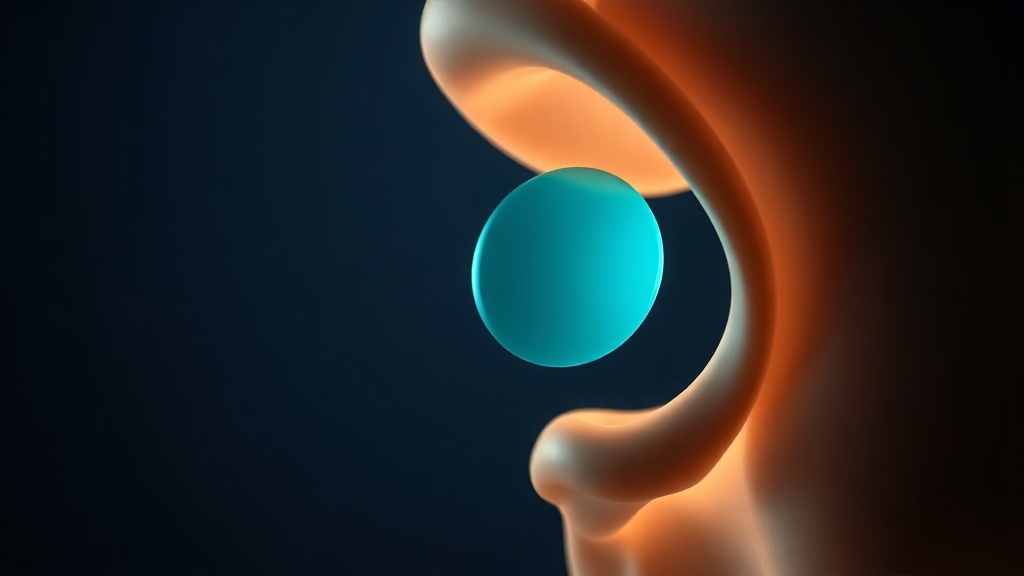
A common cause of a jaw that will not open is a joint disc slipping forward and blocking the smooth glide, a closed lock.
What the research actually shows
Every claim below maps to a named, peer-reviewed source in the Sources section. According to PubMed.
| Claim | Evidence | Source |
|---|---|---|
| Temporomandibular disorders affect roughly 31% of adults, and disc displacement is the most common joint subtype; disc displacement without reduction can limit how far the mouth opens. | Systematic review and meta-analysis. | Valesan et al., 2021 |
| A validated diagnostic protocol lets clinicians tell a joint disc problem from a muscle problem with high accuracy (screener sensitivity at least 0.86, specificity at least 0.98). | DC/TMD consensus diagnostic standard. | Schiffman et al., 2014 |
| For chronic TMD, guidelines favour conservative care such as education, supervised jaw exercise and reassurance after proper assessment, not forceful self-manipulation. | GRADE clinical practice guideline. | Busse et al., 2023 |
| Occlusal splint approaches have only very low-certainty evidence for TMD, reinforcing that a stuck joint is not something to force with appliances. | Cochrane systematic review of 57 trials. | Singh et al., 2024 |
| Cervical and jaw physical therapy can help muscle-driven jaw pain and stiffness once a professional has ruled out red flags. | Systematic review and meta-analysis of cervical rehabilitation in myogenic TMD. | Bednarczyk et al., 2024 |
Types of lockjaw and what each one needs
| What is happening | Typical signs | What it needs |
|---|---|---|
| Closed lock (displaced joint disc) | Jaw suddenly cannot open past about two finger-widths; often a history of clicking that then stopped | Dental or TMJ assessment; do not force it open |
| Muscle spasm or stiffness (trismus) | Jaw feels tight and sore, opening limited after clenching, dental work, or strain | Gentle warmth, rest, soft food; assessment if it lingers |
| Infection (tooth, wisdom tooth, deep tissue) | Lockjaw with swelling, throbbing pain, fever, or a bad taste | Urgent dental or medical care |
| After a blow or injury to the jaw or head | Lockjaw, a bite that no longer meets evenly, pain after trauma | Urgent care to rule out fracture or dislocation |
| Tetanus (rare) | Progressive jaw and neck stiffness, trouble swallowing, often after a wound | Emergency medical care immediately |
Why you should not force a locked jaw
The internet is full of clips of people cranking or cracking a stuck jaw open. That advice is risky because it ignores the cause. If the problem is a displaced disc, a closed lock, the disc is physically in the way; forcing does not slide it back, it bruises and inflames the joint and can deepen the block and the pain. If the problem is muscle spasm, forcing triggers the opposite of what you want: the muscle guards harder to protect itself, so you tighten rather than release. And if the real cause is an infection or, rarely, tetanus, then time spent on jaw tricks is time stolen from the urgent care that actually matters. This is why the honest approach is to ease gently only what is clearly muscular, and to get anything stubborn, sudden, painful, or feverish assessed. It is also why this guide is different from our gentle self-relief steps for a mildly stuck jaw: those steps are for transient muscle tightness, not for a true locked disc, and they should never be turned into a forced unlock.
Evidence you can act on.
Occasional emails — new research, new protocols, no noise.
What to do about a locked jaw, safely
These steps help you respond sensibly and avoid harm; they are not a treatment for a stuck joint or an infection. When in doubt, get it looked at.
- 1
Stop and notice which kind it is
1 minuteIs the jaw stuck closed and will not open, or stuck open and will not close? Any recent injury, dental work, swelling, or fever? A jaw locked open, or lockjaw after trauma or with a fever, is urgent, so skip the home steps and get care.
- 2
Do not force or wrench it
ongoingAvoid cranking your jaw open, cracking it, or pushing hard against the resistance. If a joint disc is blocking the movement, force can inflame the joint and make the lock worse. Let the jaw settle into a comfortable, slightly open resting position instead.
- 3
For clear muscle tightness, use gentle warmth and rest
15 to 20 minutesIf it feels like tight, sore muscle after clenching or strain, a warm compress over the jaw muscles, soft foods, and letting the jaw rest can ease the spasm. Gentle, pain-free movement is fine; pushing into pain is not.
- 4
Try only gentle, pain-free easing, never a forced unlock
a few minutesSlow, small, relaxed jaw movements within a comfortable range may help transient muscle tightness. If nothing eases within a short time, or the locking keeps returning, stop and book an assessment rather than escalating the force you use.
- 5
Get a professional to diagnose a recurring or stubborn lock
as soon as you canA dentist or TMJ specialist can tell a disc problem from a muscle problem and guide the right care. A lock that will not release, keeps coming back, or comes with pain deserves a real diagnosis, not repeated home attempts.

For clearly muscular tightness, gentle warmth and rest can ease spasm, but a stuck joint or a lock with fever needs professional care.
Seek urgent or emergency care if your jaw is locked open and will not close, if lockjaw follows a blow or injury to the jaw or head, or if it comes with facial swelling, fever, severe throbbing pain, difficulty swallowing or breathing, or progressive stiffness spreading to the neck. These can signal a dislocation, a fracture, a spreading infection, or, rarely, tetanus, and they need a professional now rather than a home remedy. Even without those red flags, a jaw that stays stuck or keeps locking should be assessed by a dentist or TMJ specialist.
Frequently asked questions
Sources
- 1.
- 2.
- 3.
- 4.
- 5.
- 6.

Fix your breath at the source.
The complete science-backed protocol — engineered to eliminate volatile sulfur compounds at the biological source.
Start the Breath Protocol →Related reading
Educational purposes only. The content on this page is not medical advice and is not a substitute for consultation with a qualified dental or medical professional.
More from the library
 Guides8 min
How to Unlock a Locked Jaw: Gentle Self-Relief Steps
Calm, evidence-based ways to coax a recently stuck jaw open again — and the red flags that mean it is time to get help.
Read →→ Causes10 min
Jaw Pain on One Side: Common Causes and When to Worry
Why does one side of your jaw hurt? The common causes - joint, muscle, dental and neck - explained honestly, with the red flags that mean it is time to get help.
Read →→ Guides9 min
TMJ Flare-Up: How to Calm Jaw Pain Fast
What a TMJ flare is, why it happens, and the gentle, proven steps that calm jaw pain fastest — plus when to get help.
Read →→ Guides9 min
TMJ Disorder: The Complete Guide
What TMJ disorder really is, how common it is, and the conservative-care-first path most people never hear about.
Read →→ Guides8 min
Jaw Relaxation Exercises: A Step-by-Step Comfort Guide
A step-by-step down-regulation routine for a tight, clenched jaw, built on gentle relaxation rather than force.
Read →→ Guides9 min
Does Mewing Actually Work? An Honest, Evidence-Based Breakdown
The honest, evidence-based answer to whether tongue posture can reshape an adult jaw — what the research really shows, and why forcing it can backfire.
Read →→