Face Yoga for the Jawline: What It Can and Cannot Do
The honest evidence on whether facial exercises can slim, sharpen or define your jawline - and what they realistically can and cannot do.

- Your jawline shape is set mostly by bone and the fat over it. Face yoga works on small facial muscles and skin, so it cannot reshape the jawbone underneath.
- The honest verdict: there is no good evidence that facial exercises slim or chisel the jaw. Adult facial bone growth is clinically insignificant after the second decade of life.
- The one facial muscle big enough to affect jaw shape is the chewing muscle - and building it makes the face wider and more square, not slimmer.
- This is why cosmetic clinics slim a heavy jaw by shrinking the chewing muscle with botulinum toxin - the exact opposite of exercising it.
- Face yoga is a pleasant, low-risk relaxation habit. Treat it as self-care, not sculpting, and lean on posture, skin care and body composition for how a jawline actually looks.
Face yoga can relax and tone small facial muscles and may feel pleasant, but the honest verdict is that it cannot slim or reshape your jawline. The jawline is bone and overlying fat, and adult bone does not respond to exercise. The only jaw muscle large enough to matter is the chewing muscle - and building it widens the face rather than sculpting it.
What face yoga is - and what a jawline is made of
Face yoga is a set of repetitive facial movements and self-massage aimed at exercising the muscles of expression, in the hope of a firmer, more youthful, more defined look. To judge whether it can do anything for a jawline, it helps to see what a jawline is actually made of. From the outside in, there is skin, then a layer of fat, then muscle, and finally bone. The crisp line people admire is mostly the shape of the jawbone itself and how much fat sits over it. Face yoga can reach the skin and the small muscles of expression, and that is the whole ceiling of what it can influence. It cannot touch the bone. In an adult the mandible is a finished structure, and repeated facial movements do not remodel it any more than smiling reshapes your cheekbones. So while face yoga may leave your face feeling relaxed and looking briefly flushed and lifted, the underlying architecture of your jawline is simply not something a facial exercise can move.
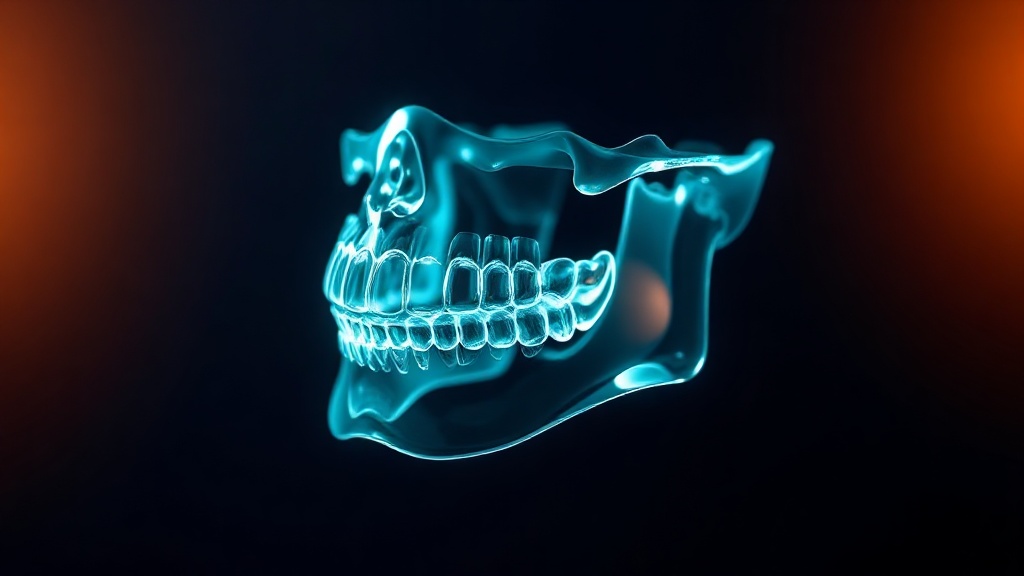
The jawline is bone and overlying fat. The one muscle big enough to change its look is the chewing muscle - and it widens the face when it grows.
What the research actually shows
Every claim below maps to a named, peer-reviewed source in the Sources section. According to PubMed.
| Claim | Evidence | Source |
|---|---|---|
| Six months of jaw-muscle training raised bite force but left masseter muscle thickness and mandibular shape unchanged - genuine exercise did not visibly reshape the jaw. | Randomised controlled trial of chewing-muscle training. | Jung et al., 2024 |
| A thicker chewing muscle is associated with a wider, shorter, more square lower face - so building jaw muscle widens the face rather than slimming the jawline. | Cross-sectional study relating masseter thickness to facial morphology. | Raadsheer et al., 1996 |
| Cosmetic medicine slims a heavy lower face by shrinking the chewing muscle with botulinum toxin, reducing lower-facial width by about 5 mm - the opposite of exercising the muscle. | Phase 3 randomised controlled trial of masseter botulinum toxin. | Sun et al., 2026 |
| Craniofacial skeletal growth is clinically insignificant after the second decade of life - in adults there is no growth window for any exercise to reshape the jawbone. | Cephalometric cohort study of facial growth after puberty. | Fudalej et al., 2007 |
| Oral-muscle and functional treatment measurably changes the muscle - not the bone - on ultrasound, confirming that muscle work stays in the muscle layer. | Ultrasonographic evaluation of masseter after functional treatment. | Patini et al., 2019 |
What face yoga can and cannot do for the jawline
| Popular claim | What is really going on | Realistic? |
|---|---|---|
| Slims or chisels the jawbone | Bone does not respond to facial exercise | No |
| Sharply defines the jawline | At most tones skin and small muscles; posture does more | Minor, appearance |
| Builds a stronger jaw by working the muscle | A bigger chewing muscle widens and squares the face | Widens, not slims |
| Erases a double chin or tightens loose skin | Evidence is weak and any effect is short-lived | Marginal |
| Replaces cosmetic jaw treatments | Clinics slim the jaw by shrinking the muscle - the reverse of exercise | No |
The paradox of exercising your jaw
There is a genuine catch that most jawline-exercise content never mentions. Suppose a facial routine really did strengthen the one muscle large enough to affect jaw shape - the masseter, the thick chewing muscle at the back angle of the jaw. That would not carve out a slimmer, sharper jawline. It would do the opposite. Across morphology studies a thicker masseter goes hand in hand with a wider, shorter, more square lower face - the strong, boxy look, not the slim, tapered one most people picture. This is not a fringe idea; it is exactly why aesthetic clinics treat a heavy jaw by injecting botulinum toxin to shrink the masseter, measurably narrowing the lower face. So the logic behind chewing gadgets and hard jaw workouts is backwards: if they worked, they would widen. And in careful trials even months of real chewing training raised bite strength without changing muscle thickness or jaw shape at all. Either way, exercising your way to a chiselled jaw runs into a wall - the bone will not move, and the muscle, if anything, points in the wrong direction.
Evidence you can act on.
Occasional emails — new research, new protocols, no noise.
How to get the most from face yoga, honestly
Face yoga is a low-risk, pleasant relaxation and circulation habit - so enjoy it for what it is, and put your real effort into the levers that actually change how a jawline looks.
- 1
Treat it as relaxation, not remodeling
5-10 minutesApproach face yoga like a gentle stretch for a tense face. It can ease clenching and feel good, which is a fair reason to do it. Just do not expect it to move bone.
- 2
Keep it gentle on the skin
each sessionAvoid dragging or hard tugging at the skin, which can irritate it over time. Light pressure and slow movements give you the relaxation benefit without the downside.
- 3
Add posture, which does more
dailyHow you hold your head and neck changes how defined a jawline looks far more than any facial exercise. A simple chin-tuck posture habit is a better use of the same minutes.
- 4
Look after skin and body composition
ongoingThe crispness of a lower face comes largely from the fat over it and the quality of the skin. Sun protection, sleep, hydration and overall body composition are the real, evidence-aligned levers.
- 5
Skip the chiselling gadgets
alwaysSilicone jaw exercisers and hard bite trainers target the chewing muscle - the one that widens the face and, worked too hard, can strain the jaw joint. They are the wrong tool for a slimmer jawline.

Enjoyed as relaxation and gentle self-massage, face yoga is harmless - just do not expect it to reshape the bone.
If jaw exercises, gadgets or clenching bring on jaw pain, clicking or headaches, ease off and see a dentist - these are the patterns behind temporomandibular disorders and grinding. If you genuinely want to change the shape of a heavy or wide jaw, that is a cosmetic and medical decision to discuss with a qualified clinician, not something a facial exercise can deliver. And if worry about your jawline or face is weighing on your mood or self-image, a dentist, doctor or mental-health professional is the right place to start.
Frequently asked questions
Sources
- 1.
- 2.
- 3.
- 4.
- 5.
- 6.
- 7.
- 8.

Fix your breath at the source.
The complete science-backed protocol — engineered to eliminate volatile sulfur compounds at the biological source.
Start the Breath Protocol →Related reading
Educational purposes only. The content on this page is not medical advice and is not a substitute for consultation with a qualified dental or medical professional.
More from the library
 Guides8 min
How to Get a Sharper Jawline: What Works and What Does Not
The jawline advice online is mostly hype. Here is what genuinely changes how defined your jaw looks, what does nothing, and where the real (sometimes medical) levers are.
Read →→ Guides8 min
Does Chewing Gum Help Your Jawline? An Honest, Evidence-Based Answer
Gum-chewing gets sold as a jawline hack. The evidence says it trains bite force, not bone - and pushed too far it can bulk and ache the very muscle you are trying to define.
Read →→ Guides9 min
Does Mewing Actually Work? An Honest, Evidence-Based Breakdown
The honest, evidence-based answer to whether tongue posture can reshape an adult jaw — what the research really shows, and why forcing it can backfire.
Read →→ Reviews9 min
Does Jawzrsize Actually Work? Evidence, Results, and Alternatives
The evidence-based verdict on the viral jaw exerciser — and why bulking your jaw muscle is the wrong direction.
Read →→ Guides8 min
Jaw Relaxation Exercises: A Step-by-Step Comfort Guide
A step-by-step down-regulation routine for a tight, clenched jaw, built on gentle relaxation rather than force.
Read →→ Guides8 min
How to Unlock a Locked Jaw: Gentle Self-Relief Steps
Calm, evidence-based ways to coax a recently stuck jaw open again — and the red flags that mean it is time to get help.
Read →→