
The Best Mouthwash for Receding Gums, by Ingredient
For receding gums, a gentle alcohol-free rinse can soothe and protect exposed roots, but no mouthwash regrows lost gum.

- For receding gums, the priority is a gentle, alcohol-free rinse: alcohol dries the mouth and offers no real benefit, while exposed roots and thin tissue need soothing, not stinging.
- A fluoride rinse matters more here than for healthy gums, because recession exposes softer root surfaces that are more prone to decay.
- Chlorhexidine is powerful but stains teeth and is meant for short courses, so it is a targeted tool on a dentist's advice, not a daily receding-gum rinse.
- A mouthwash reaches the between-teeth surfaces of your gums, not deep below the gumline, so treat it as a soothing finisher rather than a deep treatment.
- No rinse regrows receded gums; the goal is to calm inflammation, protect exposed roots and slow further recession while a dentist guides the bigger picture.
The best mouthwash for receding gums is a gentle, alcohol-free rinse, ideally with fluoride to protect exposed roots. Alcohol-free essential-oil or cetylpyridinium chloride formulas soothe without drying, while chlorhexidine is a short-course option a dentist may suggest. A rinse can calm and protect, but it cannot regrow gum tissue.
Why receding gums change what you want from a rinse
When gums recede, they pull back to expose part of the tooth root. Root surface is covered by cementum and dentine rather than hard enamel, so it is softer, more sensitive to hot and cold, and more vulnerable to decay. That shifts what a good mouthwash needs to do. For healthy gums, people often chase the strongest antibacterial punch. For receding gums, gentleness and protection matter more. This is where alcohol becomes the key variable. Alcohol gives a rinse its sharp bite but adds little breath or gum benefit, and it can dry the mouth; a drier mouth means less protective saliva bathing those exposed roots. An alcohol-free formula avoids that, which is why it is the sensible default when tissue is thin and roots are bare. Fluoride is the second priority, because it hardens and protects the newly exposed root surface against decay in a way antibacterial actives do not. So the honest brief for receding gums is a rinse that soothes, does not dry, and protects the root, used as a gentle daily finisher rather than a stinging deep clean.
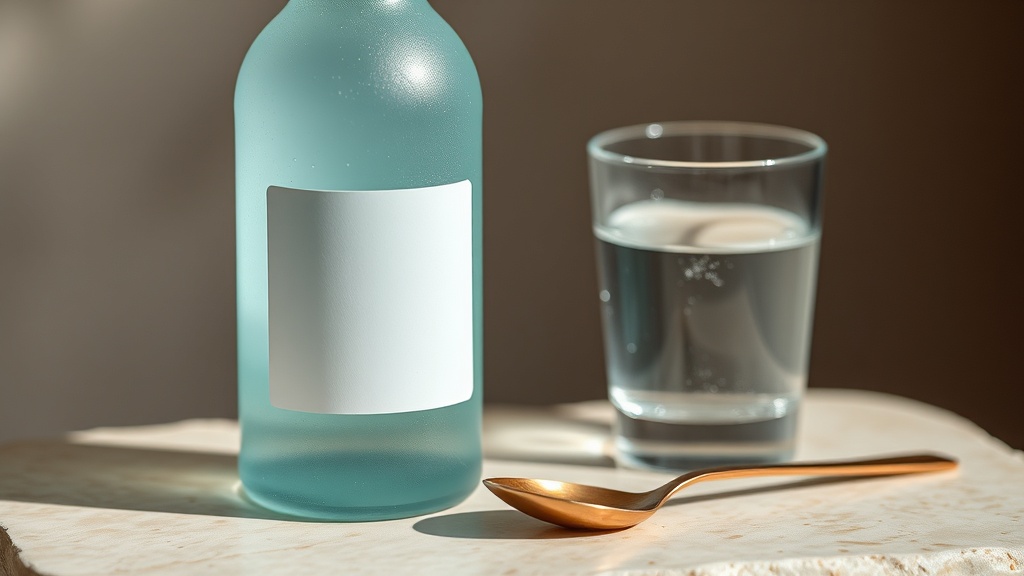
For receding gums the label priorities flip: alcohol-free and fluoride-containing matter more than raw antibacterial strength.
What the research actually shows
Every claim below maps to a named, peer-reviewed source in the Sources section. According to PubMed.
| Claim | Evidence | Source |
|---|---|---|
| A meta-analysis found no sufficient evidence that alcohol-containing mouthwash causes oral cancer, but alcohol adds a drying sting without clear benefit, so alcohol-free is the safe everyday default. | Meta-analysis of alcohol mouthwash and oral cancer risk. | Aceves Argemi et al., 2020 |
| An alcohol-free essential-oil rinse reduced plaque by about 31.6% and gingivitis by about 24.0% over six months versus control, showing gentle formulas can still calm inflamed gums. | Six-month randomised controlled trial. | Cortelli et al., 2013 |
| An essential-oil rinse was not significantly different from chlorhexidine for gingival inflammation, so a gentler daily rinse can approach the antiseptic gold standard for gum inflammation. | Systematic review comparing essential oils with chlorhexidine. | Van Leeuwen et al., 2011 |
| Chlorhexidine produces a large reduction in plaque but causes significantly more tooth staining, which is why it is reserved for short courses rather than daily receding-gum use. | Cochrane systematic review of chlorhexidine mouthrinse. | James et al., Cochrane 2017 |
| A mouthrinse applied passively failed to achieve any significant penetration of periodontal pockets, so a rinse reaches between-teeth surfaces, not deep below the gumline. | Study of rinse penetration into periodontal pockets. | Pitcher et al., 1980 |
Best mouthwash for receding gums, by active ingredient
| Ingredient | Best for | Why it suits receding gums | Main tradeoff |
|---|---|---|---|
| Alcohol-free fluoride rinse | Everyday protection of exposed roots | Hardens softer root surface against decay; no drying | Modest anti-inflammatory effect on its own |
| Alcohol-free essential oils | Daily calming of inflamed gumline | Reduces plaque and gingivitis without a sting | Freshening is short-lived; not a deep clean |
| Cetylpyridinium chloride (CPC) | Gentle daily antibacterial use | Cuts odour and plaque bacteria; alcohol-free versions available | Can cause minor staining with heavy use |
| Green tea (catechin) rinse | Those wanting a gentler antiseptic | Antiplaque effect with less staining than chlorhexidine | Fewer products; evidence from small trials |
| Chlorhexidine | Short, dentist-directed courses | Strongest antibacterial burst when truly needed | Stains teeth; not for daily long-term use |
What a rinse can and cannot do for recession
It helps to be honest about the ceiling. A mouthwash is a liquid that washes over the surfaces it can reach. The research is clear that a passive rinse does not penetrate deep periodontal pockets, so it works on the visible gumline and the between-teeth surfaces, not on the deep structures where advanced gum disease lives. That makes it a soothing, protective, plaque-reducing finisher, and it is genuinely useful in that role: gentle rinses meaningfully lower plaque and gum inflammation over months. What it cannot do is rebuild tissue. Receded gums do not grow back on their own, and no rinse changes that; the only re-coverage of an exposed root in the research follows gum surgery. Recession is also driven partly by mechanical wear, and tends to show up more on the cheek-facing surfaces that a hard brush and heavy hand reach most, so protecting those areas is about gentle technique as much as any product. The practical takeaway: use a gentle, alcohol-free, fluoride rinse to calm the gumline and shield exposed roots, keep your brushing light, and let a dentist assess whether the recession itself needs treatment beyond home care.
Evidence you can act on.
Occasional emails — new research, new protocols, no noise.
How to choose and use a rinse for receding gums
Prioritise gentle and protective over strong, and use the rinse as a finishing step.
- 1
Choose alcohol-free first
onceRead the label and pick an alcohol-free formula. Alcohol dries the mouth and stings exposed roots without adding a benefit that matters for recession, so it is the first thing to rule out.
- 2
Prioritise fluoride for exposed roots
onceRecession bares softer root surface that decays more easily. A fluoride rinse helps protect it, which is a bigger priority here than for someone with healthy, fully covered gums.
- 3
Brush gently, then rinse
dailyBrush with a soft brush and a light touch, clean between the teeth, then rinse. The mouthwash polishes an already-clean, soothed gumline; it is not there to compensate for heavy scrubbing.
- 4
Keep chlorhexidine for short, guided courses
as advisedIf a dentist recommends chlorhexidine for a flare-up, use it for the short course they specify and then stop, because staining sets in with longer use. It is a tool, not a daily habit.
- 5
Do not rinse away your fluoride toothpaste
dailyIf you use a fluoride toothpaste, avoid rinsing straight after brushing, which washes the fluoride off. Use mouthwash at a separate time of day so both actually get to work.
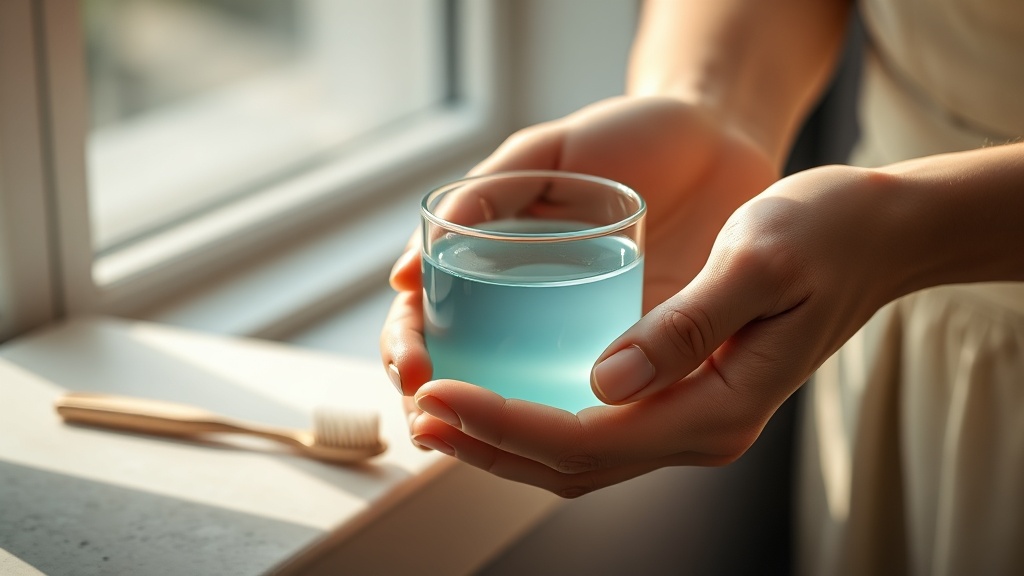
A rinse is a gentle finisher on top of light brushing, not a substitute for careful technique or a dental review.
Receding gums are worth a professional look, not just a new rinse. If your gums are visibly pulling back, your teeth feel newly sensitive or loose, or you see bleeding that does not settle, book a dental visit. A dentist can find the cause, whether it is brushing technique, grinding or gum disease, advise whether a fluoride or chlorhexidine rinse fits your case, and discuss options like gum grafting that no mouthwash can replace. A rinse supports the plan; it is not the plan.
Frequently asked questions
Sources
- 1.
- 2.
- 3.
- 4.
- 5.
- 6.
- 7.

Fix your breath at the source.
The complete science-backed protocol — engineered to eliminate volatile sulfur compounds at the biological source.
Start the Breath Protocol →Related reading
Educational purposes only. The content on this page is not medical advice and is not a substitute for consultation with a qualified dental or medical professional.
More from the library
 Guides8 min
How to Stop Receding Gums: What Actually Slows It
You cannot will your gum line back up, but you can often stop it from dropping further. Here is what the evidence supports.
Read →→ Answers8 min
Can Receding Gums Grow Back? The Honest Answer
It is the question everyone with recession asks. The straight answer, and what you can realistically do instead.
Read →→ Guides8 min
Gum Recession Treatment: Every Option, Compared
The right treatment depends on why your gums receded and how far. Here is the full ladder, with what each rung can honestly deliver.
Read →→ Best Of8 min
The Best Toothpaste for Receding Gums, by Ingredient
For receding gums, choose a low-abrasion fluoride toothpaste with a proven desensitising active; it soothes and protects exposed roots but cannot regrow gum.
Read →→ Guides8 min
Gum Disease Symptoms: The Early Warnings You Can Feel
The symptoms of gum disease you can feel and notice yourself, why bleeding comes first, and when a symptom means see a dentist now.
Read →→ Guides8 min
Periodontal Disease: The Full Spectrum, Explained
A clear, honest overview of periodontal disease as a spectrum: the difference between gingivitis and periodontitis, what the colloquial phrase gum disease misses, and why early bleeding is the signal to act.
Read →→