
Tonsil Stone Stuck and Won't Come Out?
When a tonsil stone feels stuck and won't come out, the calm, gentle approach beats force every time — here is exactly what to do.
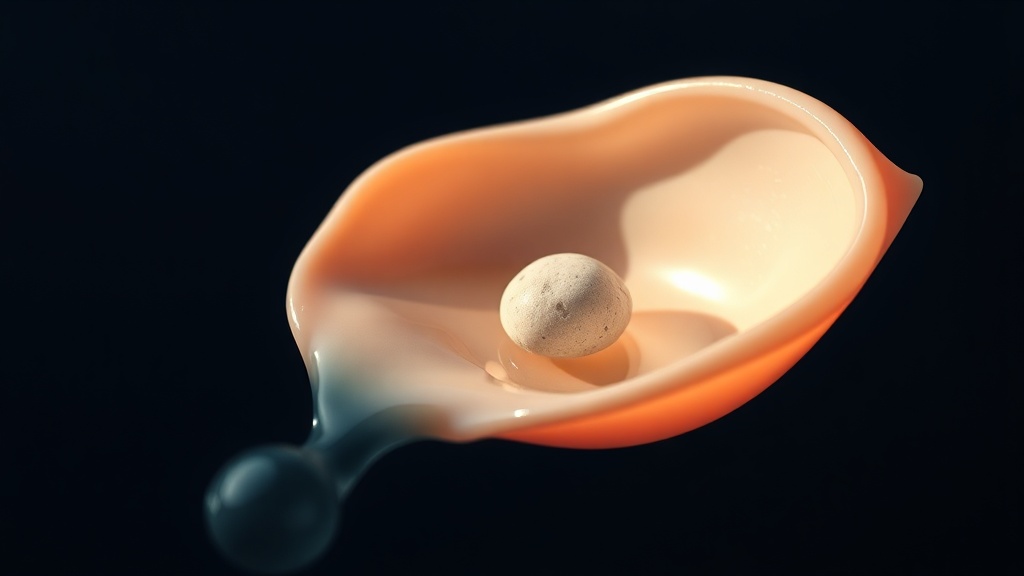
- A stuck tonsil stone is rarely an emergency — most lodged stones work themselves loose over days as the body naturally pushes them toward the throat.
- Gentle wins: a low-pressure water rinse can loosen a stone that fingers and picks cannot safely reach, disrupting the debris without injuring the tissue.
- The one thing to avoid is gouging — rigid or sharp tools near the throat cause real trauma, and the tonsil bed bleeds readily.
- If you can feel a stone but cannot see it, that is common; the sensation often outlasts the stone, and forceful hunting does more harm than good.
- See a dentist or ENT if a stone is large, painful or persistent, or if one tonsil stays swollen — a professional can remove it safely.
If a tonsil stone is stuck, the safest approach is patience and gentle pressure, not force. Most lodged stones work loose on their own — the body tends to push them toward the throat — and a low-pressure water rinse can help. Never dig with a pick or fingernail; if it is large, painful or persistent, see a professional.
Why a stone gets stuck — and why that is usually fine
A tonsil stone feels stuck for a simple reason: it is wedged in a crypt, one of the deep, sometimes branched folds on the surface of your tonsil. The deeper the crypt, the more securely debris lodges, and the more it resists a casual poke. That can be maddening when you can see or feel it and it will not shift — but a lodged stone is very rarely dangerous, and the anatomy is quietly on your side. On repeat imaging, most tonsil stones that move drift toward the opening of the throat, where they are eventually swallowed or coughed out, and a meaningful share disappear entirely over time. In other words, the natural direction of travel is out, not in. A stone that feels immovable today has a good chance of loosening on its own within days, especially if you help it along with gentle, repeated rinsing rather than a single forceful attempt. The instinct to attack it hard is understandable, but it is exactly the instinct that turns a harmless nuisance into an injury.

A stone lodged in a deep crypt usually loosens with patient, repeated low-pressure rinsing — the natural direction of travel is outward.
What the research actually shows
Every claim below maps to a named, peer-reviewed source in the Sources section. According to PubMed.
| Claim | Evidence | Source |
|---|---|---|
| Most tonsil stones that move drift toward the throat opening and 12.1% disappear entirely on follow-up — a stuck stone often works itself loose, so patience is reasonable. | Serial CT of 326 scan pairs. | Yamashita et al., 2021 |
| A single water-irrigation cycle significantly lowered volatile sulfur gases and removed plaque — gentle flushing is a sensible way to loosen a stuck stone. | Independent trial, n=20. | Karm et al., 2025 |
| A pulsatile water jet removed about 99.9% of biofilm within seconds in the lab — hydraulic disruption loosens debris that picking cannot safely reach. | Ex-vivo biofilm study (industry-affiliated). | Gorur et al., 2009 |
| Oral irrigation was found safe and well-accepted when used appropriately — supporting low-pressure water over rigid tools. | Independent scoping review of 275 sources. | Sarkisova et al., 2024 |
| Rigid tools near the throat can cause severe oropharyngeal trauma — the evidence base for never gouging a stuck stone. | Case report plus review of 13 cases. | Kumar et al., 2008 |
A stone that won't come out: what to do
| Situation | Best move | Why |
|---|---|---|
| You can see it and it looks loose | Gentle low-pressure rinse or a soft swab | Loosens debris without injuring the tissue |
| It's wedged deep and won't budge | Leave it and rinse gently over days | Most stones migrate toward the throat and self-expel |
| You're tempted to dig it out | Put the pick down | Rigid tools cause throat trauma, bleeding and infection risk |
| It's large, painful or persistent | See a dentist or ENT | A professional can remove it safely and check the tissue |
Why gouging is the one thing to avoid
When a stone will not come out, the temptation is to reach for something rigid — a bobby pin, a metal pick, a fingernail — and pry. This is the single riskiest thing you can do. The tissue around the tonsils is delicate and richly supplied with blood; in surgical data the tonsil bed bleeds readily, and clinicians treat it with care for exactly that reason. A sharp tool that slips can puncture the tissue, cause bleeding, and open the door to infection, turning a cosmetic annoyance into a genuine problem. There is also a smarter physical reason to choose water over a pick. A stone is a biofilm packed into a crypt, and a gentle pulsating stream disrupts and floats debris out of the folds far more effectively — and far more safely — than jabbing at it, which tends to compact the stone deeper or bruise the surrounding tissue. So the guiding principle is to loosen, never to lever: repeated gentle rinsing, a soft cotton swab with light pressure at most, and time. If those do not work, that is your signal to hand the job to a professional, not to escalate to a sharper tool.
Evidence you can act on.
Occasional emails — new research, new protocols, no noise.
How to coax a stuck stone out — gently
The goal is to loosen and float the stone free, never to pry it out. None of this treats a disease — it simply helps clear trapped debris safely.
- 1
Start with a low-pressure water rinse
under a minute, repeat dailyAim a gentle, low-pressure water stream at the tonsil area to loosen the stone from its crypt. Keep the pressure at its lowest setting — forceful jets can bruise or bleed the tissue — and repeat over a few days rather than expecting one blast to do it.
- 2
Try a warm gargle to loosen debris first
30 secondsA warm water or mild salt-water gargle before rinsing can help soften and dislodge surface debris and is low-risk and soothing. Treat it as a way to loosen material, not as a cure — it simply makes the gentle rinse that follows a little more effective.
- 3
Use a soft swab with light pressure — at most
a few secondsIf the stone is clearly visible and near the surface, a damp cotton swab with light, downward pressure can nudge it free. Stop the moment you feel resistance or discomfort. If it does not release easily, it is not ready — leave it rather than pushing harder.
- 4
Work with your gag reflex, not against it
as neededIf reaching the back of the throat makes you gag, use a smaller tool and minimise contact with the very back of the tongue; reducing the trigger works better than trying to suppress the reflex. Angle a mirror and good light so you can be precise and brief.
- 5
Know when to simply stop
—If gentle rinsing and a soft swab do not work, the safest move is to stop and let time do the rest — most stuck stones loosen on their own. Escalating to sharp tools is where harm happens, so a stone that resists gentle effort is one to leave alone or take to a professional.

Loosen, never lever: gentle water and a soft swab are safe; rigid picks near the throat are where injuries happen.
A stuck stone is usually harmless, but hand it over rather than forcing it if it is large, painful, or simply will not clear with gentle effort. Book an in-person visit if one tonsil stays visibly larger than the other, if you have repeated throat infections, ongoing pain or difficulty swallowing, persistent ear pain, or any bleeding. A lasting one-sided enlargement in particular should always be checked by an ENT rather than self-managed, because a persistent asymmetry is something a professional should rule out.
Frequently asked questions
Sources
- 1.
- 2.
- 3.
- 4.
- 5.
- 6.
- 7.

Fix your breath at the source.
The complete science-backed protocol — engineered to eliminate volatile sulfur compounds at the biological source.
Start the Breath Protocol →Related reading
Educational purposes only. The content on this page is not medical advice and is not a substitute for consultation with a qualified dental or medical professional.
More from the library
 Guides8 min
How to Dislodge a Tonsil Stone (Gently and Safely)
Dislodging a tonsil stone is about loosening its grip, not forcing it out. Here's the gentle, low-pressure technique — and the one thing you should never do.
Read →→ Guides8 min
How to Remove Tonsil Stones at Home: The Complete Toolkit
A practical, tool-by-tool guide to clearing tonsil stones safely at home — and to the honest limits of each method.
Read →→ Guides8 min
How to Remove Tonsil Stones Without Gagging
Gagging is the main reason at-home removal fails. The fix is to change the stimulus, not your willpower — here's the gentle, gag-minimising routine.
Read →→ Answers8 min
Can a Dentist Remove Tonsil Stones? Your Professional Options
Who actually removes tonsil stones, the in-office options from simple expression to crypt reshaping, and how to know when a professional is worth it.
Read →→ Causes8 min
How Do Tonsil Stones Form? The Biology, Honestly Explained
The unglamorous truth about what a tonsil stone is, how it builds up in the folds of your tonsils, and why the crypts that make them are simply part of your anatomy.
Read →→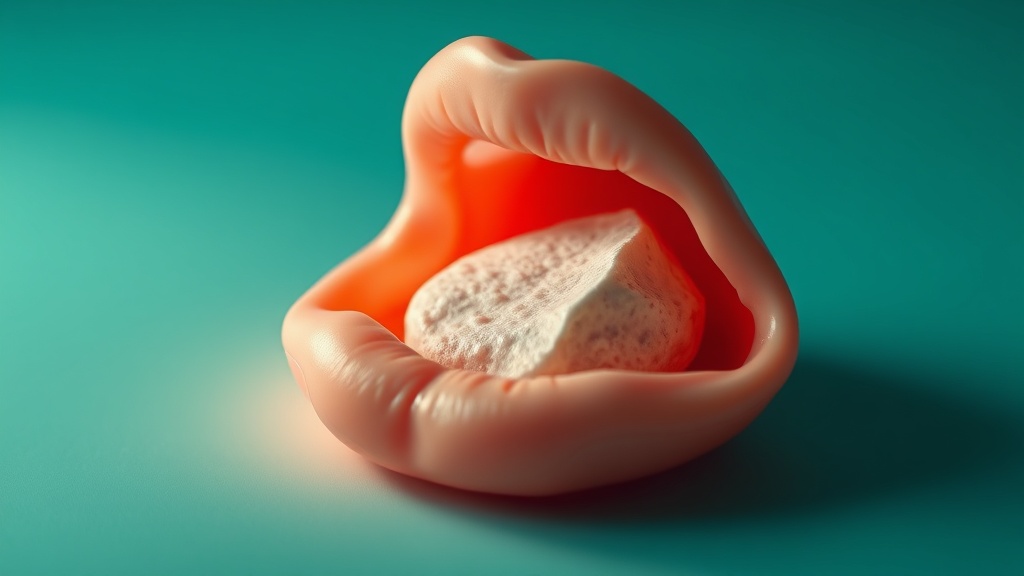 Answers8 min
Can Tonsil Stones Make You Sick? An Honest Look
A calm, honest look at whether tonsil stones can actually make you unwell, the local nuisances they do cause, and the red flags worth taking seriously.
Read →→