Can You Get Tonsil Stones Without Tonsillitis?
Why tonsil stones and tonsillitis are two different things, why most people with stones have healthy tonsils, and the few signs worth checking.
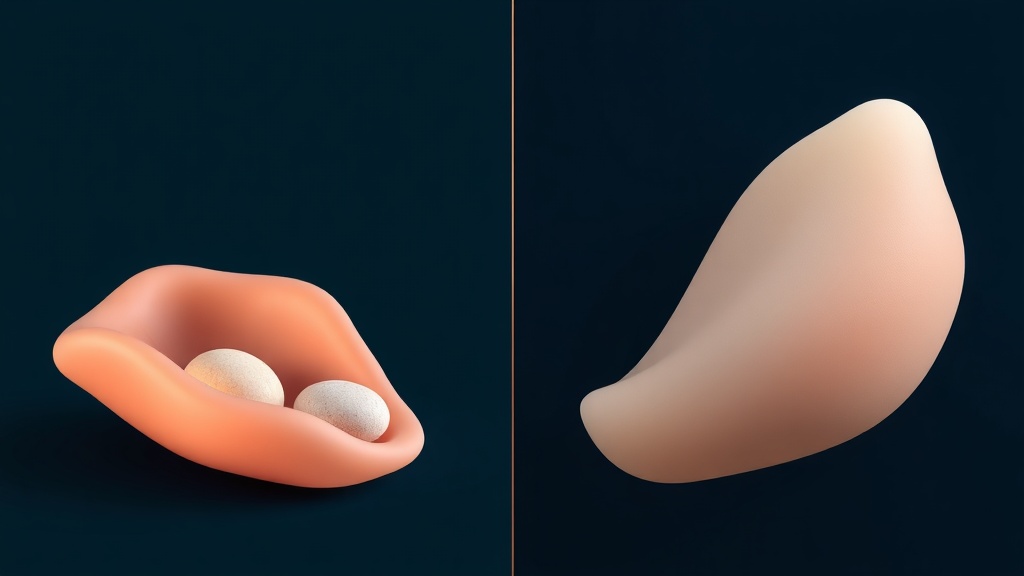
- Yes. You can absolutely have tonsil stones without having tonsillitis. In fact most people who get them have perfectly healthy, uninfected tonsils.
- Tonsillitis is an active infection or inflammation of the tonsils; a tonsil stone is simply trapped debris and bacteria sitting in one of the tonsil natural pockets. They are two different things that can look alike.
- Tonsil stones are extremely common and usually silent: on CT imaging they turn up in roughly one in seven to one in three people, most of whom have no infection and no symptoms at all.
- Because a stone is debris rather than an infection, it is a cosmetic nuisance, mainly odour and a foreign-body feeling, not a sign that something is wrong with your immune system.
- There are a few situations, such as a lasting change in one tonsil, a fever or a severe sore throat, that are worth having checked, because those point to something other than a simple stone.
Yes. Tonsil stones and tonsillitis are different things. A stone is trapped debris and bacteria lodged in a tonsil crypt, while tonsillitis is an active infection of the tonsil. Most people with tonsil stones have healthy, uninfected tonsils, which is why the stones are common, usually silent and mostly a cosmetic nuisance.
Tonsil stones and tonsillitis are not the same thing
The confusion is understandable, because both involve the tonsils, but they are genuinely different. Your tonsils are not smooth; their surface is folded into deep pockets called crypts. Everyday debris, shed cells from the mouth and throat, tiny food particles and mucus, settles into those folds, and where a crypt is deep the material lodges instead of washing away. Bacteria colonise it, and over time it organises into a firm little mass. That is a tonsil stone, and studies that examined them under the microscope describe an organised bacterial biofilm sitting in the pocket, not an infection of the tissue. Tonsillitis is something else entirely: an active infection or inflammation of the tonsil itself, usually with a sore, painful throat and often a fever. You do not need one to have the other. The clearest evidence is how common silent stones are. On CT imaging, tonsil stones show up in roughly one in seven to one in three people depending on the scan, mostly small, mostly discovered by accident, in people who came in for something unrelated and had no throat infection at all. In other words, a healthy, uninfected tonsil is exactly where most stones quietly live.
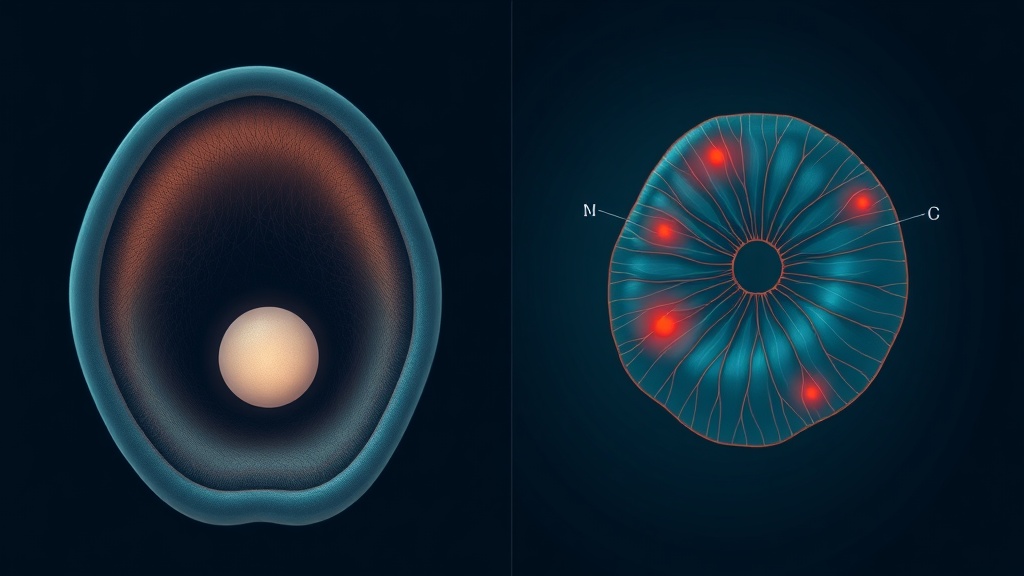
A tonsil stone sits quietly in a normal crypt; tonsillitis is active inflammation of the tonsil itself. They are not the same.
What the research actually shows
Every claim below maps to a named, peer-reviewed source in the Sources section. According to PubMed.
| Claim | Evidence | Source |
|---|---|---|
| Tonsil stones appear on roughly 30% of CT scans, averaging about 2.7 per person, mostly small and asymptomatic in people without infection. | Largest CT prevalence series (n=3,886). | Kim et al., 2018 |
| Tonsil stones were found as an incidental finding in 14.1% of head and neck CT scans, with prevalence rising with age. | Retrospective review of 2,710 CT exams. | Yu et al., 2017 |
| Small tonsil stones are common clinical findings that are managed expectantly, not treated as an infection. | Am Fam Physician clinical review. | Smith et al., 2023 |
| A tonsil stone is an organised living biofilm sitting in the crypt, which is a debris-and-bacteria structure rather than an infection of the tissue. | Confocal microscopy and microelectrode study of 16 adults. | Stoodley et al., 2009 |
| Tonsil stones often move and clear on their own: on repeat scans 12.1% disappeared and most that shifted moved toward the throat opening. | Follow-up CT of 326 scan pairs. | Yamashita et al., 2021 |
Tonsil stone versus tonsillitis
| Feature | Tonsil stone | Tonsillitis |
|---|---|---|
| What it is | Trapped debris and bacteria in a crypt | An active infection or inflammation of the tonsil |
| Pain | Usually none, sometimes mild irritation | Often a sore, painful throat |
| Fever | No | Frequently |
| Smell or taste | Common, a distinct sulfur odour | Sometimes |
| Course | Comes and goes, can recur | An episode that resolves or is treated |
| Catching it from others | No | Possible, if an infection is the cause |
Why a stone does not mean your tonsils are infected
If you have found a stone and felt a jolt of worry that something is wrong with you, the reassuring truth is that a stone is a plumbing problem, not an immune one. It is debris that collected in a pocket and was colonised by ordinary mouth bacteria, which is why authoritative reviews describe small stones as common findings to be managed as they come rather than infections to be cured. There is a nuance worth being honest about: a past history of tonsillitis can leave a tonsil scarred, and scarred crypts can trap more material, so in some groups prior infection is one correlate of getting stones. But a correlate is not the same as a cause happening now. Plenty of people with no infection history get stones purely because their crypts are deep, and plenty of people who have had tonsillitis never get a single stone. On top of that, stones are not permanent fixtures: on repeat imaging most that move drift toward the throat opening and are swallowed or coughed out, and a share vanish on their own. So the everyday picture is calm, a common, often self-clearing nuisance in an otherwise healthy throat, best handled with gentle care rather than alarm.
Evidence you can act on.
Occasional emails — new research, new protocols, no noise.
What to do if you have stones but feel fine
If there is no pain, no fever and no swelling, you are almost certainly dealing with a plain stone. The aim is simply to clear debris and keep the breath fresh, not to treat an infection.
- 1
Clear them gently
under a minute dailyA low-pressure water rinse aimed at the tonsil area coaxes debris loose before it builds up. Keep the pressure gentle to protect the tissue, and never force a stone that will not budge.
- 2
Keep the breath fresh
dailyStay hydrated so saliva can do its rinsing job, and keep up brushing, flossing and an alcohol-free rinse. This lowers the general bacterial load even though it does not reach inside the crypt itself.
- 3
Do not treat it like an infection
n/aA plain stone is not a reason for antibiotics, which do nothing for trapped debris and are only appropriate for a genuine infection diagnosed by a clinician. Reaching for them for stones alone is both unhelpful and best avoided.
- 4
Watch for the few warning signs
ongoingKeep a casual eye out for one tonsil staying larger than the other, a fever, or a severe or worsening sore throat. Those change the picture from a simple stone to something worth a professional look.
- 5
See someone if they take over your life
as neededIf stones are constant and genuinely wearing you down, an ENT can help, including discussing options that reshape the crypts. That is about quality of life, not because a stone is dangerous.

For most people a stone is a calm, everyday nuisance, cleared with gentle rinsing and good hydration.
See a dentist or an ENT if one tonsil stays visibly larger than the other, because a persistent one-sided difference should always be assessed in person rather than self-treated. A fever, a severe or worsening sore throat, or trouble swallowing point toward a possible infection rather than a plain stone and deserve a clinician. Note too that a peritonsillar abscess is often afebrile, so the absence of a fever is not on its own a reason to wait if you feel genuinely unwell.
Frequently asked questions
Sources
- 1.
- 2.
- 3.
- 4.
- 5.
- 6.
- 7.
- 8.
- 9.
- 10.

Fix your breath at the source.
The complete science-backed protocol — engineered to eliminate volatile sulfur compounds at the biological source.
Start the Breath Protocol →Related reading
Educational purposes only. The content on this page is not medical advice and is not a substitute for consultation with a qualified dental or medical professional.
More from the library
 Causes8 min
How Do Tonsil Stones Form? The Biology, Honestly Explained
The unglamorous truth about what a tonsil stone is, how it builds up in the folds of your tonsils, and why the crypts that make them are simply part of your anatomy.
Read →→ Guides8 min
Cryptic Tonsils: What They Are and Why They Trap Stones
Some tonsils are simply built with deeper, more folded pockets — here is what cryptic really means, why those crypts collect stones and odour, and how to manage them without chasing a cure.
Read →→ Answers8 min
Can Tonsil Stones Make You Sick? An Honest Look
A calm, honest look at whether tonsil stones can actually make you unwell, the local nuisances they do cause, and the red flags worth taking seriously.
Read →→ Guides8 min
What Causes Tonsil Stones? The Biology Behind Them
Why some people get tonsil stones again and again, explained by the anatomy of the tonsil crypts.
Read →→ Answers8 min
Can a Dentist Remove Tonsil Stones? Your Professional Options
Who actually removes tonsil stones, the in-office options from simple expression to crypt reshaping, and how to know when a professional is worth it.
Read →→ Answers8 min
Why Do My Tonsil Stones Smell So Bad? The Sulfur Science
The unmistakable, sulfurous smell of a tonsil stone has a specific bacterial chemistry behind it — and understanding it points straight to what actually helps.
Read →→