Gum Recession: Why Flossing Harder Is Shredding Your Tissue
The force you mistake for thoroughness is one of the few causes of gum damage you can actually stop adding — and the tissue you lose to it will not come back.
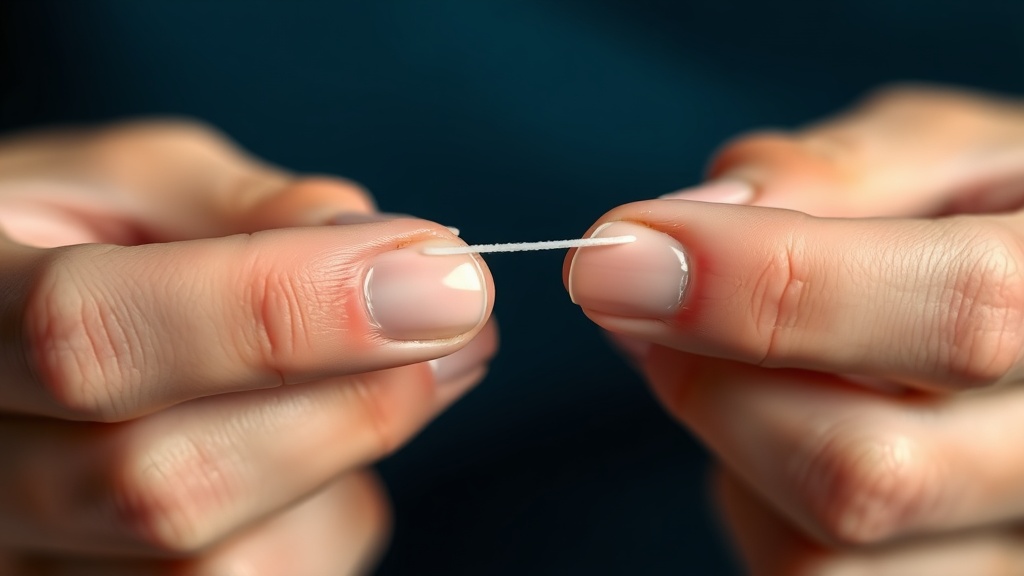
- Harder is not cleaner. Dental plaque is a soft film that lifts away with light, thorough contact — the extra force you add scrubs your gums, not just your teeth.
- Aggressive mechanical force — snapping floss down into the gumline, sawing it side to side, and scrubbing with a stiff brush at heavy pressure — is a documented way to traumatize gum tissue, and hard bristles cause more gum lesions than soft ones.
- Recession is multifactorial. Gum inflammation, a naturally thin gum type, tooth position, clenching and grinding, and over-aggressive cleaning can each play a part — it is rarely a single villain.
- Here is the honest part most brands skip: once gum tissue has receded, it does not grow back on its own. The realistic goal is protecting the tissue you still have.
- Gentle, correct technique removes just as much plaque with far less risk. This article is educational and cannot diagnose — recession, bleeding, pain, or loose teeth all deserve a dentist or periodontist.
No — brushing and flossing harder does not get your mouth cleaner. It just adds force your gums have to absorb. Snapping floss into the gumline, sawing side to side, and scrubbing with a stiff brush can traumatize the tissue over time. Plaque is soft and lifts with gentle contact, so gentle, thorough technique protects the gums you already have.
Why 'harder' feels right — and why it backfires
For most of us, cleaning means scrubbing. We treat plaque like baked-on grime on a pan and reach for more pressure, a stiffer brush, a harder pass with the floss. It feels thorough. The problem is that dental plaque is nothing like burnt-on food. It is a soft, living biofilm, and it surrenders to gentle mechanical contact — the light sweep of a soft bristle or the wipe of floss against the tooth. Past the point where the film is gone, extra force does not clean anything more. It simply has to land somewhere, and where it lands is your gums. The gum margin — the delicate collar of tissue where each tooth meets the gumline — is not built to absorb that. A stiff bristle driven at heavy pressure, or a strand of floss snapped straight down into the little cuff between tooth and gum, delivers a small mechanical insult. Do it twice a day for years and those insults add up. Dentists connect this pattern of chronic over-scrubbing to two visible results: the gum edge creeping down the tooth, which is recession, and the wedge-shaped notches worn into the exposed root, which is abrasion. In a systematic review of manual toothbrushes, hard bristles produced more gum lesions than medium or soft ones — a rare, clean signal in a genuinely messy field. Here is the honest caveat, up front: the science does not support a simple 'brushing hard causes recession' headline. The landmark review of toothbrushing and non-inflammatory recession weighed frequency, duration, force, bristle hardness and technique, and concluded the evidence was inconclusive — because recession has many inputs and is hard to pin on any one. So the claim of this article is not that force is the cause. It is narrower and more useful: aggressive force is a real, modifiable insult, and it is the one input entirely under your control.
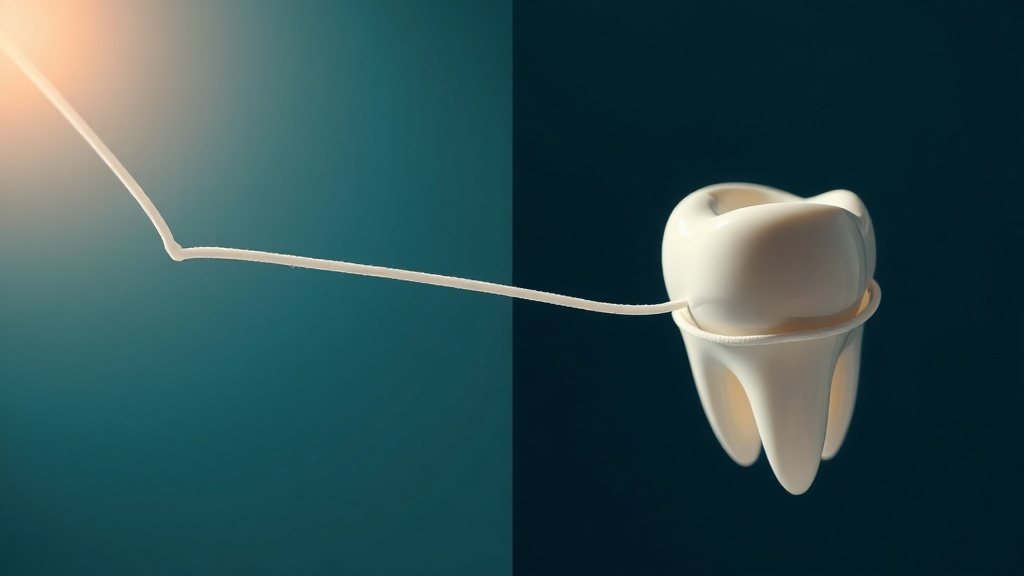
Force versus finesse: floss snapped straight and sawed across the gum (left) versus curved into a gentle C that hugs the tooth (right).
What the research actually shows
Every claim below maps to a named, peer-reviewed study. According to PubMed.
| Claim | Evidence | Source |
|---|---|---|
| Hard toothbrush bristles cause more gum lesions than softer ones | A 2018 systematic review of manual toothbrushes found that hard-bristle brushes produced more gingival lesions than medium- and soft-bristle brushes, and that soft and extra-soft brushes tend to be safer for the soft tissue. | Ranzan et al., Int Dent J, 2018 |
| Brushing force, hardness and technique are plausible risk factors — but the evidence is mixed | A landmark systematic review on toothbrushing and non-inflammatory gingival recession identified brushing force, frequency, duration, bristle hardness and technique as candidate factors, while concluding the overall data were inconclusive. | Rajapakse et al., J Clin Periodontol, 2007 |
| Recession is multifactorial and extremely common with age | A review of epidemiologic studies reported that roughly 50% of people aged 18 to 64, and 88% of those 65 and older, have one or more sites of gum recession, and described recession as multifactorial — linked to trauma, tooth position, inflammation and more. | Kassab & Cohen, J Am Dent Assoc, 2003 |
| Even young adults show near-universal recession, linked partly to brushing motion | In a study of young UK adults, every participant had at least one tooth with recession; maximum recession correlated with unsystematic brushing motion, and the authors concluded recession in young adults is multifactorial and highly prevalent. | Seong et al., J Dent, 2018 |
| Flossing and interdental cleaning, done as intended, are safe for the gums | A Cochrane review of home interdental cleaning added to toothbrushing found it may reduce gum inflammation, and that studies measuring adverse events reported no severe events and no difference in minor effects such as gum irritation. | Worthington et al., Cochrane Database Syst Rev, 2019 |
Force versus finesse, side by side
| Bearing down (harder = cleaner) | Gentle, correct technique | |
|---|---|---|
| What it does to plaque | Nothing extra — the soft film is already gone with light contact | Removes it just as well; light pressure disrupts the biofilm |
| What it does to the gum margin | Delivers repeated force the tissue absorbs — a route to trauma and abrasion | Spares it; bristles and floss hug the tooth instead of gouging the gum |
| The brush | Hard bristles, splayed flat from pressure, linked to more gum lesions | Soft or extra-soft bristles, angled gently at the gumline |
| The floss | Snapped straight down and sawed side to side across the gum | Curved into a C-shape, eased under the margin, wiped along the tooth |
| Over the years | Notches, sensitivity, and a receded margin that will not return | You keep the gum tissue and root coverage you have |
It is rarely just one thing: the honest map of recession
If you take one idea from this article, make it this: gum recession is multifactorial. Mechanical over-cleaning is only one lane. The others matter just as much, and often more. The largest is inflammation from gum disease — a bacterial process, driven by plaque left behind rather than force applied, that can pull the gumline down. It is also something this article cannot diagnose, and it needs a dentist. Then there is your anatomy: some people are simply born with a thin gum type, a fine tissue that sits over prominent roots and recedes more readily than thick, robust gums. Tooth position plays a part too. A tooth that sits slightly outside the arch has less bone and gum covering its root to begin with, so the margin has less to give before it shows. In a long-term study of orthodontic patients, tooth movement turned out to be only a minor risk factor for recession — a useful reminder that no single cause dominates. Habitual clenching and grinding load the teeth in ways that may contribute as well. And then, alongside all of that, sits the mechanical-force lever this article is about. This is exactly why no toothbrush, floss or rinse can 'fix' recession, and why you should be sceptical of anything that promises to. Because gum is not enamel and not skin: once the margin has migrated down and tissue is lost, it does not spontaneously grow back. The only way to physically restore lost coverage is a gum graft or a similar procedure performed by a periodontist — a real option, but a clinical one, not a home remedy. So the entire point of gentleness is not to undo the past. It is to stop adding damage and protect the tissue you still have.
Evidence you can act on.
Occasional emails — new research, new protocols, no noise.
The gentle technique that still gets you clean
You do not need force. You need contact, the right angle, and consistency. Here is a routine that removes plaque thoroughly while sparing the gumline — the tissue you cannot get back.
- 1
Switch to a soft or extra-soft brush
TodayMedium and hard brushes buy you nothing in cleaning power and cost you in gum safety — reviewed evidence links harder bristles to more gum lesions. A soft or extra-soft brush, replaced every three months or when the bristles start to splay, is the gentler and equally effective choice.
- 2
Hold it like a pen, not a scrub brush
Every brushA tight palm grip invites you to bear down. Hold the brush in a light pen grip instead, angle the bristles about 45 degrees toward the gumline, and use short, gentle strokes or small circles for a full two minutes. Let the bristles do the work; if they are bending flat, you are pushing too hard. A powered brush with a pressure sensor can help retrain the habit.
- 3
Floss in a C, not a guillotine
DailyEase the floss down gently past the contact point — never snap it straight down into the gum. Curve it into a C-shape around the side of each tooth, slide it just under the margin until you feel light resistance, then wipe up and down the tooth surface. Never saw it flat, side to side, across the gum.
- 4
Try a gentler interdental tool if floss fights you
DailyInterdental brushes, soft rubber picks and water flossers all clean between the teeth and are supported by the evidence as adjuncts to brushing; many people find them far kinder to the tissue than string floss. The best tool is the one you will actually use, correctly and gently, every day.
- 5
When gums bleed, ease off — do not bear down
OngoingBleeding usually signals inflammation, not a spot you have failed to scrub hard enough. The answer is gentle, consistent cleaning and a professional check — not more force. Ease off around any tender area or recent dental work, and let a dentist look at anything that keeps bleeding.
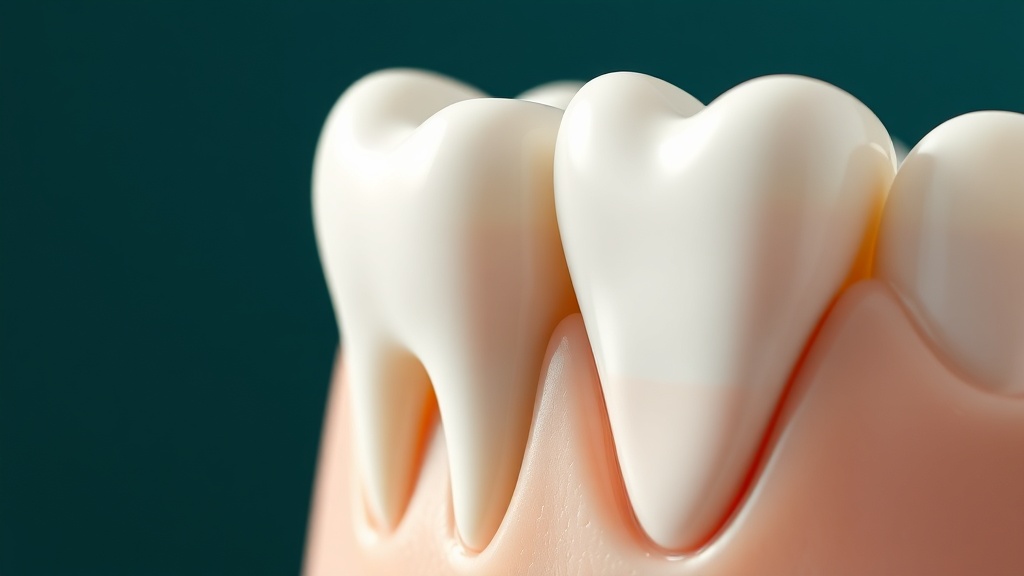
A healthy gum margin versus one that has receded to expose more of the tooth. Lost tissue like this does not grow back on its own.
Gum recession you can see, gums that bleed, throb or feel sore, a tooth that suddenly looks longer, new sensitivity to cold, or any looseness or shifting all deserve a professional look — they can signal gum disease or other conditions this article cannot diagnose. A dentist or periodontist can assess what is really happening and, if tissue has already been lost, talk you through options such as grafting that no home routine can replace. Educational content like this supports your care; it never substitutes for an exam. And if your gums bleed when you clean them, the answer is a check-up, not more force.
Frequently asked questions
Sources
- 1.
- 2.
- 3.
- 4.
- 5.
- 6.
- 7.
- 8.

Fix your breath at the source.
The complete science-backed protocol — engineered to eliminate volatile sulfur compounds at the biological source.
Start the Breath Protocol →Related reading
Educational purposes only. The content on this page is not medical advice and is not a substitute for consultation with a qualified dental or medical professional.
More from the library
 Answers8 min
Can Receding Gums Grow Back? The Honest Answer
It is the question everyone with recession asks. The straight answer, and what you can realistically do instead.
Read →→ Guides8 min
Gum Recession Treatment: Every Option, Compared
The right treatment depends on why your gums receded and how far. Here is the full ladder, with what each rung can honestly deliver.
Read →→ Guides8 min
How to Stop Receding Gums: What Actually Slows It
You cannot will your gum line back up, but you can often stop it from dropping further. Here is what the evidence supports.
Read →→ The Journal9 min
The Oral Microbiome: Your Body's Command Center
Most of the bacteria in your mouth are allies — and keeping them in balance may matter far beyond your breath.
Read →→ Guides8 min
Gum Disease Symptoms: The Early Warnings You Can Feel
The symptoms of gum disease you can feel and notice yourself, why bleeding comes first, and when a symptom means see a dentist now.
Read →→ Guides8 min
Periodontal Disease: The Full Spectrum, Explained
A clear, honest overview of periodontal disease as a spectrum: the difference between gingivitis and periodontitis, what the colloquial phrase gum disease misses, and why early bleeding is the signal to act.
Read →→