
Receding Gum on One Tooth: Why It Happens and What Helps
Why recession often shows up on a single tooth first, what is usually behind it, and how to protect that one site.
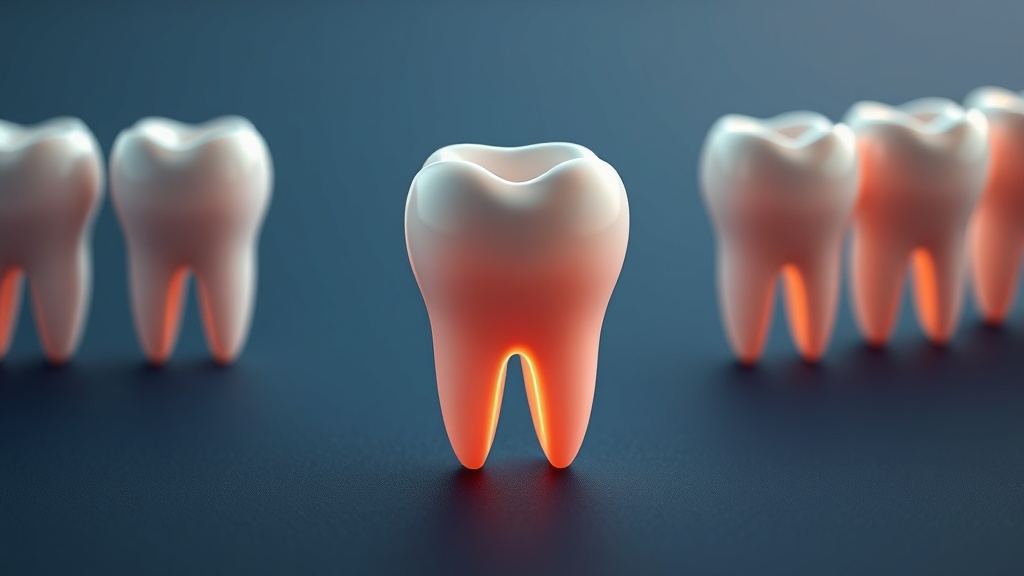
- Recession on a single tooth is usually a local, mechanical story — not whole-mouth gum disease. One site is taking a specific stress the others are not.
- The usual suspects are a tooth that sits forward or crowded (so its root is prominent and thinly covered), a brushing angle that hammers that spot, a lip or tongue piercing, or a tight muscle fold (frenum) pulling on the margin.
- Because it is local, the fix is local too — change what is stressing that one site — but the receded tissue there still will not grow back on its own.
- A single receding tooth is the easiest, highest-value case to catch early, and often the most coverable surgically if the attachment between the neighbouring teeth is intact.
- Get one worsening tooth checked: a periodontist can tell whether it needs only technique changes or a small graft.
Recession on one tooth is usually local and mechanical: a prominent or crowded tooth, a hard brushing angle on that spot, a piercing, or a frenum pull. Fixing the local cause stops it worsening, and a single site with intact between-teeth attachment is often the most coverable — but the lost tissue will not regrow by itself.
Why one tooth and not the rest
When recession appears on a single tooth while its neighbours look fine, that asymmetry is itself the biggest clue. Widespread gum disease tends to affect many teeth together; a lone receding tooth almost always means that one site is absorbing a stress the others escape. The most common reason is position. A tooth that sits slightly forward or is crowded out of the arch has its root pressed close to the thin outer edge of the bone, covered by only a sliver of gum — so it takes very little force or plaque to trigger recession there. This fits what large surveys show: recession concentrates on the cheek-facing surfaces, and a prominent tooth presents the most exposed cheek-side surface of all. Add a brushing habit that happens to scrub that one spot hardest, and you have a recipe for recession on a single tooth. The good news in the asymmetry is practical: because the neighbouring teeth are healthy, the attachment between them is usually intact — which, as with all recession, is the factor that most improves the odds if you later choose to have the root covered.
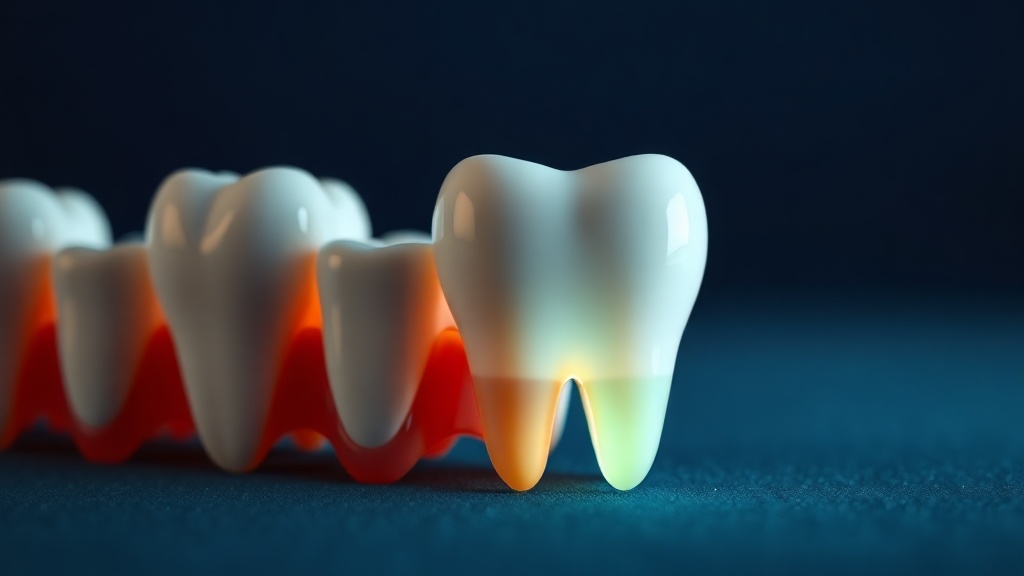
A single receding tooth usually means one site — often a prominent or crowded one — is taking a stress its neighbours are not.
What the research actually shows
Every claim below maps to a named, peer-reviewed source in the Sources section. According to PubMed.
| Claim | Evidence | Source |
|---|---|---|
| Recession is more common and severe on the cheek-side surfaces — and a single prominent tooth presents the most exposed cheek-side surface. | NHANES III national survey. | Albandar & Kingman, 1999 |
| Even in young adults, individual teeth show deep 4–8 mm recession sites — single-tooth recession is common and can appear early. | Young-adult cohort. | Seong et al., 2018 |
| A single site's coverage outlook depends on the attachment between the neighbouring teeth (Cairo RT1–RT3). | Classification study. | Cairo et al., 2011 |
| The best-ranked surgical fix for a single exposed root combines a connective-tissue graft with a coronally advanced flap. | Network meta-analysis. | Chambrone et al., 2022 |
| Left alone, a lone recession site tends to deepen over the years. | 10–27 year split-mouth study. | Agudio et al., 2009 |
Local causes behind a single receding tooth
| Local cause | Why it is just that one tooth | What helps |
|---|---|---|
| Prominent or crowded tooth | Its root sits forward with very thin gum over it | Gentle care; assess for a graft |
| Hard brushing angle | You happen to scrub that spot hardest | Change grip and angle; soft brush |
| Lip or tongue piercing | The jewellery rubs that exact site | Remove or relocate it; see a dentist |
| Tight frenum (muscle pull) | A constant tug on that one margin | A minor procedure can release it |
| Grinding contact | That tooth takes the heaviest bite load | A nightguard or bite check |
The local triggers worth checking
Beyond tooth position, a short checklist of local triggers explains most single-tooth recession, and each has a specific fix. A lip or tongue piercing is a classic culprit: the jewellery rests against one gum margin and rubs it thousands of times a day, wearing that exact site back while the rest of the mouth stays healthy — which is why removing or relocating it matters. A tight frenum, the small fold of muscle that connects lip or cheek to gum, can tug continuously on a single margin; a minor surgical release relieves that pull. Night-time grinding often loads one tooth more than the others, and a nightguard spreads that force. A rough edge on a filling or crown, or a tooth recently moved by orthodontics, can concentrate stress on one site too. The unifying idea is that a single receding tooth is a local problem with a local answer — and finding the specific trigger is what stops it. What none of these fixes can do is regrow the gum that has already gone; that remains the domain of a periodontist and a graft, which happily is often very achievable on an otherwise healthy single tooth.
Evidence you can act on.
Occasional emails — new research, new protocols, no noise.
Protecting a single receding tooth
The plan is to find and remove the local stress on that one tooth, protect the exposed root, and get it assessed. None of this treats a disease at home — it protects the tissue you still have.
- 1
Change the mechanics on that tooth
every brushUse a soft brush and a gentle angle, and consciously lighten the pressure on the prominent tooth rather than scrubbing it. A pressure-sensing powered brush helps if you tend to bear down.
- 2
Remove any local irritant
as neededIf a lip or tongue piercing contacts the site, consider removing or relocating it; ask your dentist to smooth any rough restoration edge.
- 3
Keep the site clean without gouging
dailyClean gently around that tooth with a soft interdental or rubber-tip cleaner, which removes plaque with fewer gum abrasions than aggressive flossing.
- 4
Check the frenum and the bite
consultIf a muscle fold is tugging the margin or the tooth takes a heavy bite, ask about a frenum release or a nightguard.
- 5
Have it measured and staged
one visitA single site is very coverable when caught early, so ask a periodontist to measure it and advise whether a small graft is worthwhile.
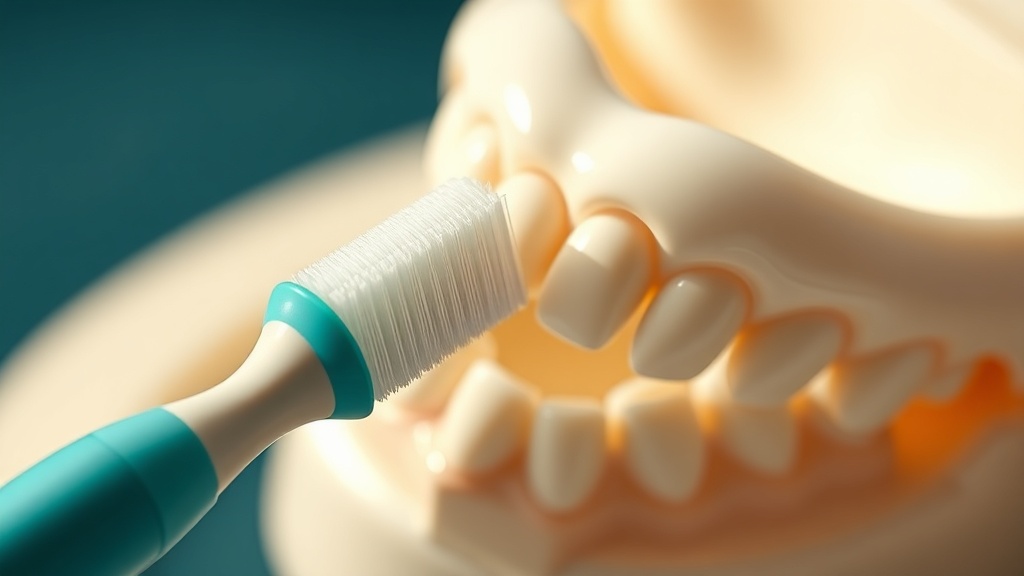
For a single receding tooth, the highest-value move is easing the pressure and angle on that exact spot.
A single receding tooth is worth a dental visit, both to confirm it is truly local rather than the first sign of wider disease and to catch it while coverage is most achievable. See a dentist or periodontist promptly if the site is deepening, sensitive, or you can see the root; only surgery can cover it, and a lone, otherwise-healthy tooth is often an ideal candidate. Do not dig at the area with sharp tools. This article is educational and is not a diagnosis.
Frequently asked questions
Sources
- 1.
- 2.
- 3.
- 4.
- 5.
- 6.
- 7.
- 8.
- 9.

Fix your breath at the source.
The complete science-backed protocol — engineered to eliminate volatile sulfur compounds at the biological source.
Start the Breath Protocol →Related reading
Educational purposes only. The content on this page is not medical advice and is not a substitute for consultation with a qualified dental or medical professional.
More from the library
 Guides8 min
Receding Gums: The Stages, Explained
How gum recession is staged, from the first millimetre to advanced root exposure, and what each stage means for what can be done.
Read →→ Guides8 min
Gum Recession: The Complete, Honest Guide
A clear, evidence-based map of gum recession — what it is, what drives it, and the honest truth about what you can and cannot change at home.
Read →→ Guides8 min
Gum Recession Treatment: Every Option, Compared
The right treatment depends on why your gums receded and how far. Here is the full ladder, with what each rung can honestly deliver.
Read →→ Guides8 min
How to Stop Receding Gums: What Actually Slows It
You cannot will your gum line back up, but you can often stop it from dropping further. Here is what the evidence supports.
Read →→ Guides8 min
Gum Disease Symptoms: The Early Warnings You Can Feel
The symptoms of gum disease you can feel and notice yourself, why bleeding comes first, and when a symptom means see a dentist now.
Read →→ Answers8 min
Can Receding Gums Grow Back? The Honest Answer
It is the question everyone with recession asks. The straight answer, and what you can realistically do instead.
Read →→