How to Use a Waterpik for Your Gums
A water flosser is a genuine adjunct to brushing and flossing, not a replacement. Here is how to use one correctly, and what the evidence says it does for your gums.
- A water flosser like a Waterpik is a legitimate adjunct to brushing, and in studies it reduces gum bleeding more than string floss over four weeks.
- It works mainly by flushing the gumline and between teeth with a pulsating stream; it does not scrub away plaque the way a toothbrush does.
- Independent reviews find water flossers do not reliably reduce visible plaque, but they do show a real, positive effect on gum bleeding and inflammation.
- Start on the lowest pressure, lean over the sink and trace the gumline; comfort and daily consistency matter more than force.
- A water flosser supports gum health but does not treat gum disease; deep pockets and hardened tartar still need a dental professional.
To use a Waterpik for your gums, fill the reservoir with warm water, start on the lowest pressure, lean over the sink, and glide the tip along the gumline and between every tooth for about a minute. Aim the stream at roughly 90 degrees to the gum and pause briefly between teeth. Use it once a day, as an addition to brushing.
What a water flosser actually does for your gums
A water flosser, of which Waterpik is the best-known brand, sends a pulsating stream of water along the gumline and into the spaces between your teeth. The pulsation matters: each pulse creates a brief compression and decompression that helps flush loose debris, food and bacteria out of the crevice around each tooth, including places a brush cannot reach. What it does well is reduce gum bleeding, a core sign of inflammation. In a four-week comparison, a water flosser produced a significantly greater reduction in whole-mouth bleeding than string floss. What it does not do is scrub the sticky plaque film off tooth surfaces the way bristles do; an independent review found that irrigators do not reliably reduce the amount of visible plaque, even though they show a consistent positive effect on gum health. That combination is the honest picture: a water flosser is a flushing tool that calms and cleans around the gums, working alongside a toothbrush that mechanically removes the plaque film. It is an adjunct, not a substitute for brushing.
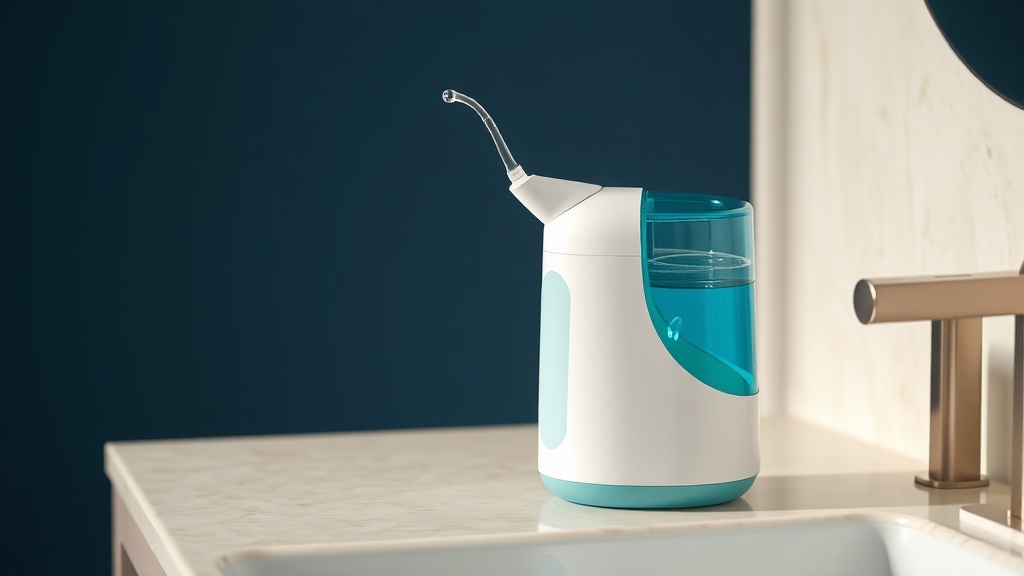
A water flosser flushes the gumline and between teeth with a pulsating stream, cleaning around the gums rather than scrubbing plaque off tooth surfaces.
What the research actually shows
Every claim below maps to a named, peer-reviewed source in the Sources section. According to PubMed.
| Claim | Evidence | Source |
|---|---|---|
| A water flosser produced significantly greater whole-mouth bleeding reduction (about 0.41) than string floss (about 0.19) over four weeks. | Randomised comparison of water flosser versus string floss. | Mancinelli-Lyle et al., 2023 |
| Compared with an interdental brush, a water flosser gave lower bleeding scores at four weeks with no increase in gingival abrasion. | Randomised comparison of water flosser versus interdental brush. | Water flosser vs interdental brush RCT, 2024 |
| Independent review found oral irrigators do not reliably reduce visible dental plaque, but show a positive trend for gingival health. | Independent systematic review of oral irrigation. | Husseini et al., 2008 |
| Cleaning between the teeth in addition to brushing helps reduce gingivitis, though the certainty of evidence for these devices is low. | Cochrane review of interdental cleaning devices. | Worthington et al., Cochrane 2019 |
| Professional subgingival instrumentation reduces pocket depth by about 1.4 mm and closes roughly 74% of pockets, reaching below the gumline where home tools cannot. | Systematic review and meta-analysis of subgingival instrumentation. | Suvan et al., 2020 |
Water flosser versus other ways to clean between the teeth
| Method | Best for | Evidence on gums | Main tradeoff |
|---|---|---|---|
| Water flosser (Waterpik) | Bleeding gums, braces, bridges, implants | More bleeding reduction than string floss at four weeks | Does not reliably remove visible plaque |
| String floss | Tight contacts and plaque between teeth | Reduces gingivitis modestly at one month | Technique-sensitive and easy to skip |
| Interdental brushes | Larger gaps and general gum health | Among the strongest interdental options for gums | Must fit the space; not for very tight teeth |
| Water flosser plus brushing | Overall daily gum care | Combines flushing with mechanical plaque removal | Two steps and a little more time |
What a water flosser cannot do
It is easy to overrate a water flosser because the sensation feels powerful and the bleeding drops quickly. Keep two limits in mind. First, it is not a replacement for brushing. Because irrigation does not reliably strip the plaque film off tooth surfaces, you still need a toothbrush to mechanically remove that film every day; the water flosser complements it, working best around the gumline and in spaces a brush misses. Second, it cannot substitute for professional care once gum disease is established. In deeper gum pockets, hardened tartar clings to the root surface below the gumline, and no home stream can remove it; that is the job of professional instrumentation, which closes the majority of pockets in a way no rinse or irrigator can. A water flosser can calm bleeding and support healthier gums day to day, but if you have persistent bleeding, deep pockets or visible tartar, treat those as signals to get a professional assessment rather than turning the pressure up. Used within its lane, though, it is one of the more pleasant and evidence-backed additions to a gum-care routine.
Evidence you can act on.
Occasional emails — new research, new protocols, no noise.
How to use a Waterpik for your gums, step by step
A simple sequence that keeps it comfortable, effective and mess-free.
- 1
Fill the reservoir with warm water
once per useUse lukewarm water, which is more comfortable than cold, especially if your teeth are sensitive. Seat the reservoir firmly and choose a standard or gentle gumline tip to start.
- 2
Start on the lowest pressure
once per useBegin at the lowest setting, particularly for your first weeks or if your gums bleed. You can increase gradually to a comfortable level; higher pressure is not the goal, and gentle settings still reduce bleeding effectively.
- 3
Lean over the sink and close your lips
dailyPlace the tip in your mouth, lean over the sink and keep your lips slightly closed around it so water flows out rather than splashing. Switch the unit on only once the tip is in your mouth.
- 4
Trace the gumline at about 90 degrees
dailyAim the stream at roughly a right angle to the gumline and glide slowly along it, pausing briefly between each tooth and at the gum margin. Work methodically from the back teeth to the front so you do not miss areas.
- 5
Spend about a minute, once a day
dailyAround one minute covers most mouths. Once daily is enough for gum benefit; there is no need to do it repeatedly, and consistency day to day matters more than duration.
- 6
Pair it with brushing
dailyUse the water flosser alongside brushing, not instead of it. Many people flush first to clear debris and then brush, but either order works; the key is that both happen.
- 7
Empty and dry the unit
ongoingEmpty the reservoir after each use and let it dry to discourage bacterial or mineral build-up, and clean the unit periodically per the instructions so it keeps working hygienically.
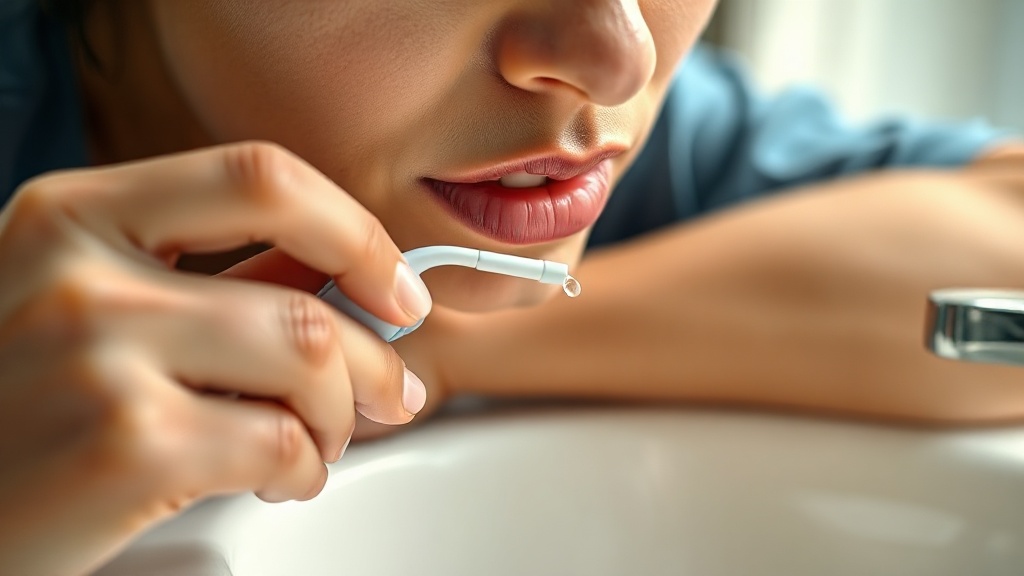
Lean over the sink, lips closed around the tip, and trace the gumline slowly; comfort and consistency matter more than pressure.
A water flosser is an adjunct, not a treatment. If your gums keep bleeding after a few weeks of good brushing and daily irrigation, if you can see or feel hardened tartar, or if a dentist has told you that you have deep gum pockets, book a professional cleaning. Tartar below the gumline and established gum disease need instrumentation that reaches beneath the gum, which no home device can replace. Use the water flosser to support healthy gums, and let a professional handle what lies deeper.
Frequently asked questions
Sources
- 1.
- 2.
- 3.
- 4.
- 5.
- 6.

Fix your breath at the source.
The complete science-backed protocol — engineered to eliminate volatile sulfur compounds at the biological source.
Start the Breath Protocol →Related reading
Educational purposes only. The content on this page is not medical advice and is not a substitute for consultation with a qualified dental or medical professional.
More from the library
 Guides8 min
Bleeding Gums: What They Mean and What to Do
A calm, honest guide to why gums bleed, why it is almost always reversible in the early stage, and the point at which bleeding is a signal to see a professional.
Read →→ Guides9 min
Gingivitis: Causes, Symptoms and How It Is Treated
The whole picture on gingivitis in one place, from plaque and bleeding to professional treatment and everyday gum-supporting habits.
Read →→ Causes8 min
Why Do My Gums Bleed When I Floss?
The specific reason flossing makes gums bleed, why it is usually a good sign that improves with time, and the point at which flossing-related bleeding needs a professional.
Read →→ Guides9 min
Gum Disease Treatment: The Professional Path and How Home Care Supports It
The evidence-based treatment path for gum disease, why professional care is non-negotiable, and how home habits support but never replace it.
Read →→ Guides8 min
Gum Disease Symptoms: The Early Warnings You Can Feel
The symptoms of gum disease you can feel and notice yourself, why bleeding comes first, and when a symptom means see a dentist now.
Read →→ Answers8 min
Can Receding Gums Grow Back? The Honest Answer
It is the question everyone with recession asks. The straight answer, and what you can realistically do instead.
Read →→