Gum Graft: What It Is and What to Expect
What a gum graft actually does, the main techniques a periodontist uses, and what recovery really looks like.
- A gum graft is a minor surgical procedure a periodontist uses to cover an exposed tooth root or thicken thin gum tissue; it is the established way to restore coverage, because receded gum tissue does not grow back on its own.
- The main types are the connective-tissue graft (tissue taken from under the palate), the free gingival graft (surface palate tissue used to build a thick, tough band of gum), and donor or allograft tissue that avoids a second surgical site.
- For covering an exposed root, the best-supported approach is a connective-tissue graft combined with a coronally advanced flap, which ranks highest for root coverage in network meta-analysis.
- Grafting is done under local anaesthetic in the chair; most people manage recovery with over-the-counter pain relief, a soft diet for a week or two, and careful hygiene around the site.
- A graft restores the tissue but does not remove the cause; it holds best when what drove the recession (heavy brushing, grinding, or gum disease) is corrected too.
A gum graft is a small periodontal surgery that replaces gum tissue lost to recession, either covering an exposed root or thickening thin gum. A periodontist moves tissue from your palate or uses donor tissue, secures it over the site, and it heals in over a few weeks. It is the reliable way to restore coverage that receded gums cannot regrow themselves.
What a gum graft actually is
Gum recession is when the gum margin pulls back and exposes more of the tooth, and often the root beneath it. It is extremely common: roughly one in five US adults over thirty has at least one site with three millimetres or more of recession, and it shows up most on the cheek-facing surfaces, the tell-tale pattern of mechanical wear from firm brushing rather than infection alone. The uncomfortable truth many people first search for is whether that tissue comes back. On its own, it does not. Gum tissue has no mechanism to migrate back down and re-cover an exposed root by itself. That is precisely the problem a graft is designed to solve. In a gum graft, a periodontist takes a small piece of tissue, most often from the roof of your mouth where there is a generous reserve of firm gum, or uses processed donor tissue, and positions it over the receded area. The tissue is tucked under or alongside the existing gum and held with fine sutures. New blood vessels grow into it over the following days, it knits into place, and the result is a thicker, more protective band of gum, and where a root was showing, coverage over that root. It is genuinely reconstructive surgery, just done at a small scale under local anaesthetic.
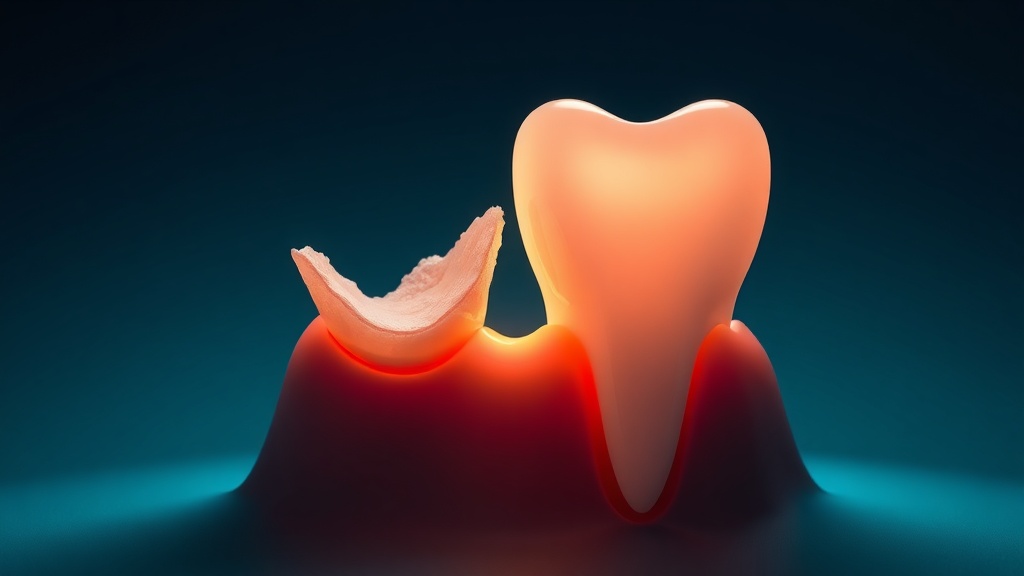
A graft restores gum tissue over an exposed root, coverage that receded gums cannot regain on their own.
What the research actually shows
Every claim below maps to a named, peer-reviewed source in the Sources section. According to PubMed.
| Claim | Evidence | Source |
|---|---|---|
| A connective-tissue graft placed under a coronally advanced flap ranks as the best-supported technique for covering an exposed root. | Network meta-analysis of root-coverage procedures. | Chambrone et al., 2022 |
| Receded gum tissue does not spontaneously return; the only spontaneous coverage reported in the literature (creeping attachment) occurs only after grafting, and even then is incomplete and unpredictable. | Review of creeping attachment after mucogingival surgery. | Wan et al., 2020 |
| Over 10 to 27 years, untreated recession sites drifted further apically (-0.7 to -1.0 mm) while grafted sites gained coverage and held it. | Long-term split-mouth comparison of grafted vs untreated sites. | Agudio et al., 2009 |
| How much interproximal attachment remains between the teeth sets a realistic ceiling on how much root coverage a graft can achieve. | Recession Type (RT) classification. | Cairo et al., 2011 |
| About 22.5% of US adults aged 30+ have 3 mm or more recession on at least one tooth, and it is more common and severe on cheek-facing surfaces. | NHANES III national survey. | Albandar & Kingman, 1999 |
The main types of gum graft
| Graft type | What it is best for | Trade-off |
|---|---|---|
| Connective-tissue graft (from the palate) | Covering exposed roots, especially with a coronally advanced flap; the best-evidenced choice | Needs a second, palate, site and a little more recovery |
| Free gingival graft | Building a band of thick, tough gum where tissue is thin or being lost | Colour can differ from surrounding gum, so often used out of the smile zone |
| Pedicle flap / coronally advanced flap | Sliding nearby gum over the site when there is plenty next door | Needs enough neighbouring gum to borrow from |
| Donor tissue / allograft (acellular dermal matrix) | Avoiding a palate wound and treating several teeth in one go | Can be slightly less predictable than your own tissue in some cases |
Why it has to be surgery, and what that buys you
It is fair to ask why a rinse, paste, or clever routine cannot do this. The answer is anatomy. Covering an exposed root means physically bringing living, blood-supplied tissue back over a surface it has retreated from, and building the connective foundation underneath it. No topical product can manufacture new tissue and route a blood supply into it; only surgery moves and secures tissue so it can re-establish. This is why the entire body of research on root coverage is surgical, and why the one phenomenon of gums appearing to creep back over a root, creeping attachment, is only ever documented after a graft, not from any home measure. The upside is that grafting does not just look better. It rebuilds a protective buffer that makes the tooth less sensitive to hot and cold, less prone to root decay on the exposed surface, and easier to keep clean. And it is durable: in long-term follow-up, grafted sites held their gained coverage for decades while comparable untreated sites kept slipping backward. The important caveat is that a graft treats the site, not the habit. If aggressive brushing, a grinding habit, or active gum disease caused the recession, those have to be addressed as well, or the same forces will work against the new tissue.
Evidence you can act on.
Occasional emails — new research, new protocols, no noise.
What to expect, step by step
A gum graft is a planned, in-chair procedure, not an emergency. Here is the arc most people go through. None of this is something to attempt yourself; it is surgery performed by a periodontist.
- 1
Assessment and planning
one visitA periodontist measures the recession, checks how much attachment remains between the teeth (which predicts how much coverage is realistic), and looks for the cause, brushing technique, a grinding habit, tooth position, or gum disease. They will recommend a graft type based on the site and your tissue.
- 2
The procedure itself
about 1 to 2 hoursThe area is numbed with local anaesthetic. Tissue is harvested from the palate or a donor source, positioned over the prepared site, and secured with fine sutures. You are awake but should feel only pressure, not pain. Sedation is available if you are anxious.
- 3
The first few days
3 to 5 daysExpect mild swelling and a palate that feels like a pizza burn if tissue was taken from there. Cool, soft foods, prescribed or over-the-counter pain relief, and rest handle this well. Avoid disturbing the site with your tongue or a straw.
- 4
Healing and suture removal
1 to 2 weeksYou keep the rest of your mouth clean but do not brush directly over the graft; a gentle prescribed rinse protects it instead. Sutures are removed or dissolve within a couple of weeks, and the graft blends in over the following weeks to months.
- 5
Fixing what caused it
ongoingThis is what makes the result last. Switch to a soft brush and light pressure, get a nightguard if you grind, and keep gum disease controlled with your dental team. The graft restores the tissue; your habits decide whether it stays.
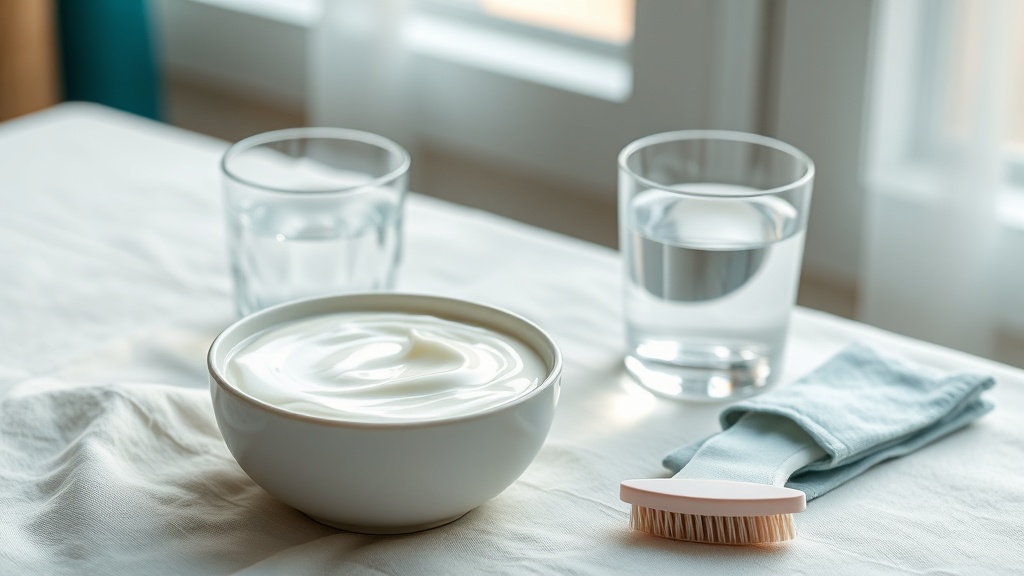
Recovery is gentle: cool soft foods, careful hygiene around the site, and a soft-bristled brush.
A gum graft is surgery and can only be done by a dental professional, usually a periodontist. If you have visible recession, sensitivity along the gumline, roots that look longer than they used to, or gums that keep receding, book an assessment. Recession is easier to cover the earlier it is caught, and a professional can also tell you when a graft is not needed and simpler steps will do. Never try to treat exposed roots with home remedies; see someone who can examine the site in person.
Frequently asked questions
Sources
- 1.
- 2.
- 3.
- 4.
- 5.
- 6.

Fix your breath at the source.
The complete science-backed protocol — engineered to eliminate volatile sulfur compounds at the biological source.
Start the Breath Protocol →Related reading
Educational purposes only. The content on this page is not medical advice and is not a substitute for consultation with a qualified dental or medical professional.
More from the library
 Guides8 min
Gum Graft Cost: What Actually Drives the Price
The honest cost drivers behind a gum graft, why quotes vary, and how to read an estimate.
Read →→ Guides8 min
Gum Recession Treatment: Every Option, Compared
The right treatment depends on why your gums receded and how far. Here is the full ladder, with what each rung can honestly deliver.
Read →→ Answers8 min
Can Receding Gums Grow Back? The Honest Answer
It is the question everyone with recession asks. The straight answer, and what you can realistically do instead.
Read →→ Guides8 min
How to Stop Receding Gums: What Actually Slows It
You cannot will your gum line back up, but you can often stop it from dropping further. Here is what the evidence supports.
Read →→ Guides8 min
Gum Disease Symptoms: The Early Warnings You Can Feel
The symptoms of gum disease you can feel and notice yourself, why bleeding comes first, and when a symptom means see a dentist now.
Read →→ Guides8 min
Periodontal Disease: The Full Spectrum, Explained
A clear, honest overview of periodontal disease as a spectrum: the difference between gingivitis and periodontitis, what the colloquial phrase gum disease misses, and why early bleeding is the signal to act.
Read →→