Why Do I Get Tonsil Stones? Your Personal Risk Factors
The personal, why-me angle: which of your own traits and habits make tonsil stones more likely — and which you can realistically change.

- If you get tonsil stones and others do not, the biggest reason is usually your own anatomy: deeper, more branched tonsil crypts simply trap and hold more debris.
- Age is the single most consistent risk factor — the chance of having them rises steadily decade by decade in nearly every large study.
- A constant supply line of debris matters: chronic post-nasal drip and sinus issues feed the crypts, and stones are more common in people with ongoing sinus inflammation.
- It is almost never a hygiene failure — a toothbrush and mouthwash cannot reach inside a crypt, which is why careful brushers still get them.
- You cannot change the shape of your crypts, but you can change the supply of debris and the dryness of your mouth, which is where a light daily habit pays off.
You get tonsil stones mainly because of the shape of your own tonsil crypts — deep, branched pockets trap more debris than shallow ones. Layer on age, chronic post-nasal drip and a dry mouth, and material collects faster than it clears. It is rarely about hygiene; some people are simply built to hold debris in the tonsils more easily.
Why it is happening to you specifically
It is natural to take tonsil stones personally — as if you must be doing something wrong. Usually you are not. The tonsil surface is folded into pockets called crypts, and how deep and branched yours are is largely fixed biology, much like the lines on your palm. People with shallow crypts clear debris easily and rarely notice a thing; people with deep or heavily branched crypts have more surface and more shadow for shed cells, food particles, mucus and bacteria to lodge in and stay. Once that material settles, it does not just sit there inertly. Research shows it organises into a living biofilm — a structured bacterial community that, when fed sugar, dropped its own internal pH from 7.3 to 5.8 and kept a nearly oxygen-free core, the exact conditions the sulfur-producing bacteria behind the smell prefer. So the reason it keeps being you is not a moral one. It is that your crypts collect a little more, hold it a little longer, and give that biofilm the time it needs to mature and harden.
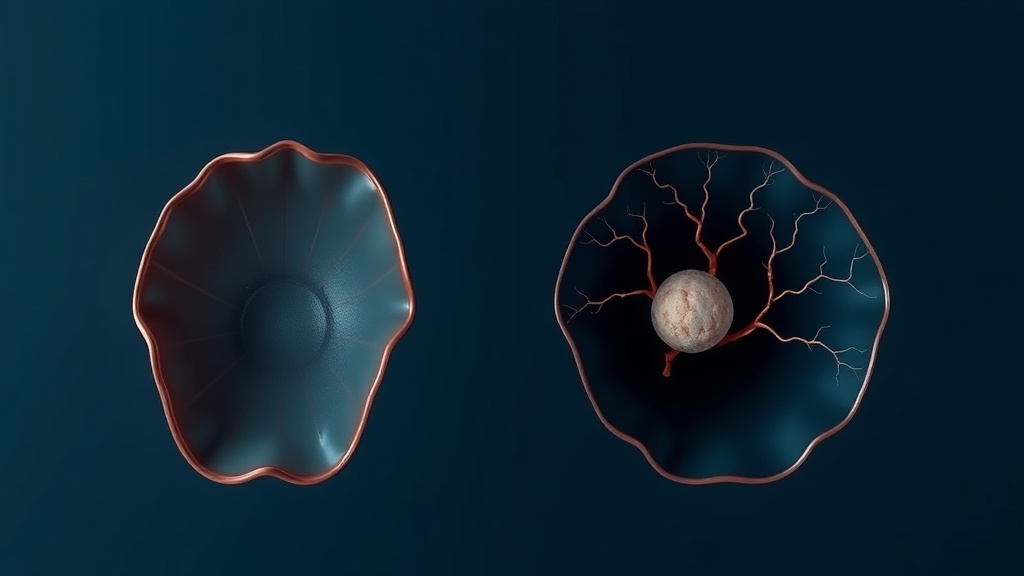
Shallow crypts self-clear; deep, branched crypts hold debris long enough for a stone to form — and that shape is largely fixed.
What the research says about who gets them
Every claim below maps to a named, peer-reviewed source in the Sources section. According to PubMed.
| Claim | Evidence | Source |
|---|---|---|
| Age is the most consistent risk factor: prevalence rose steadily with age, correlating strongly (r=0.812) in a large head-and-neck CT series. | CT review of 2,710 patients. | Yu et al., 2017 |
| Tonsil stones were markedly more common in people with chronic sinus inflammation (60 of 97 patients) than in controls (27 of 124). | Comparative imaging study of chronic rhinosinusitis patients. | Kaleemullah et al., 2024 |
| In one sample, a past history of tonsillitis was the only factor significantly linked to having tonsil stones. | Cross-sectional study (n=209). | Aragoneses et al., 2020 |
| A tonsil stone is a living biofilm, not an inert stone: feeding it sugar dropped its internal pH from 7.3 to 5.8 and its core was nearly oxygen-free. | Confocal microscopy and microelectrode study of 16 adults. | Stoodley et al., 2009 |
| Ordinary hygiene does not reach the source: a month of tongue scraping plus a zinc rinse cut general mouth odour but barely changed the odour coming from the tonsils. | Controlled comparison of oral versus tonsillar malodour. | Talebian et al., 2008 |
Which of your risk factors can you actually change?
| Risk factor | Why it feeds your stones | Can you change it? |
|---|---|---|
| Deep or branched tonsil crypts | More surface and shadow for debris to lodge and stay | No — it is your anatomy |
| Getting older | Prevalence rises steadily decade by decade | No |
| Chronic post-nasal drip or sinus issues | A constant supply of mucus and debris into the crypt | Partly — manage the drip at its source |
| A dry mouth | Less saliva to rinse the crypts, so material sits and builds | Yes — hydration and saliva flow |
| Debris left to mature | Time is what lets soft biofilm organise and harden | Yes — regular gentle clearing |
| A history of tonsillitis | Scarring can leave crypts that trap more material | No — but worth mentioning to a clinician |
Why yours keep coming back in the same spot
A frustrating signature of tonsil stones is that they often return to the exact same pocket. There is nothing mysterious about it: that particular crypt is deeper or more branched than its neighbours, so it collects and holds more, and its shape does not change between one stone and the next. This is also the honest reason ordinary oral hygiene does not solve the problem. In one controlled comparison, a full month of tongue scraping plus a zinc rinse clearly reduced general mouth odour but left the odour coming from the tonsils essentially untouched — because a toothbrush, floss and rinse simply never reach inside the crypt where the biofilm lives. So recurrence is not a sign that you are failing at hygiene. It is the predictable result of a fixed pocket meeting a steady trickle of debris. The encouraging flip side is that tonsil stones are not permanent fixtures: on repeat imaging most that move drift toward the throat opening and are swallowed or cleared, and a share disappear on their own. Recurrence is best pictured as an ongoing tug-of-war between debris collecting and debris clearing — which is exactly why a small daily habit beats any one-time fix.
Evidence you can act on.
Occasional emails — new research, new protocols, no noise.
How to make your own stones less likely
You cannot reshape your crypts, but you can shift the two things you control — the supply of debris and the dryness of your mouth. None of this treats a disease; it simply keeps your pockets tidier.
- 1
Clear the crypts gently and regularly
under a minute dailyDebris flushed out early never matures into a stone. A gentle, low-pressure water rinse aimed at the tonsil area is the most sensible tool, and a single irrigation cycle has been shown to lower the sulfur gases behind the smell. Keep the pressure low — forceful jets can bruise or bleed the tissue.
- 2
Protect your saliva and stay hydrated
all daySaliva is your built-in crypt rinse, so a dry mouth lets debris pool — part of why stones are often worst in the morning. Sip water through the day, especially after coffee or alcohol, and breathe through your nose where you can.
- 3
Settle any post-nasal drip at its source
as neededA steady drip of mucus from the back of the nose is a major supply line for crypt debris. Managing allergies or sinus congestion reduces what lands in the tonsils in the first place. Persistent congestion is worth raising with a clinician.
- 4
Keep the overall bacterial load down
twice dailyThorough brushing, flossing and an alcohol-free rinse lower the general population of odour-producing bacteria. Treat it as support for the whole environment, not a way to reach inside the crypt — it works alongside gentle clearing, not instead of it.
- 5
Never gouge with sharp or metal tools
—Digging at a tonsil with a metal pick, a bobby pin or a fingernail risks puncturing the tissue, bleeding and infection. If a stone will not release with gentle rinsing or a soft swab, leave it or see a professional.
You cannot change your crypts, but clearing debris early — gently and at low pressure — tilts the balance in your favour.
Recurring tonsil stones are usually just anatomy and can be managed at home. See a dentist or an ENT if one tonsil stays visibly larger than the other, if you have repeated throat infections, ongoing difficulty or pain swallowing, persistent ear pain, or any bleeding. A lasting one-sided enlargement in particular should always be assessed in person, because a persistent asymmetry needs a professional to rule out other causes.
Frequently asked questions
Sources
- 1.
- 2.
- 3.
- 4.
- 5.
- 6.
- 7.
- 8.

Fix your breath at the source.
The complete science-backed protocol — engineered to eliminate volatile sulfur compounds at the biological source.
Start the Breath Protocol →Related reading
Educational purposes only. The content on this page is not medical advice and is not a substitute for consultation with a qualified dental or medical professional.
More from the library
 Causes8 min
How Do Tonsil Stones Form? The Biology, Honestly Explained
The unglamorous truth about what a tonsil stone is, how it builds up in the folds of your tonsils, and why the crypts that make them are simply part of your anatomy.
Read →→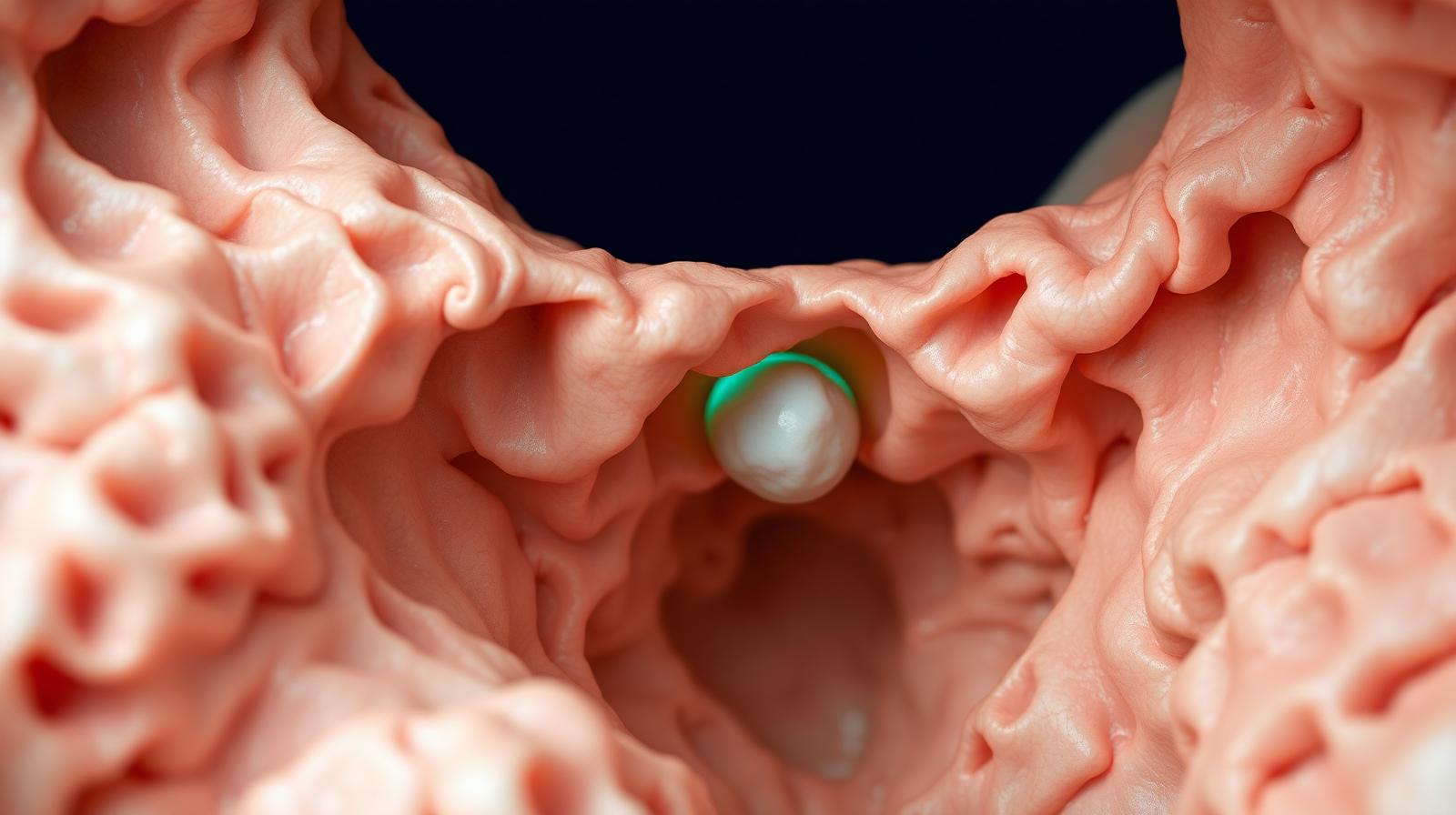 Guides8 min
What Causes Tonsil Stones? The Biology Behind Them
Why some people get tonsil stones again and again, explained by the anatomy of the tonsil crypts.
Read →→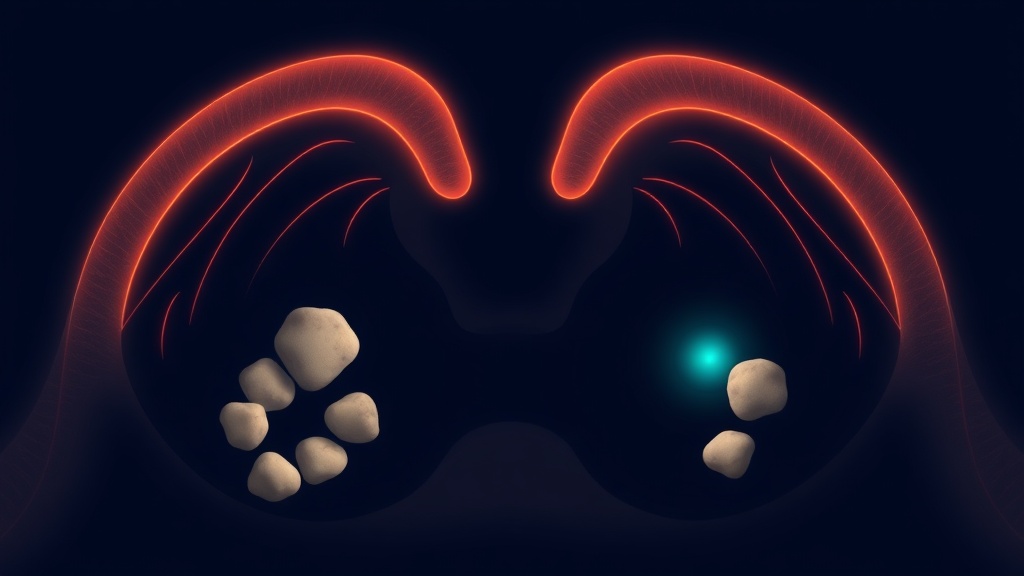 Guides8 min
Chronic Tonsil Stones: Why They Keep Coming Back
Recurring tonsil stones are driven by anatomy you cannot change — so the honest goal is steady control, not a one-time cure.
Read →→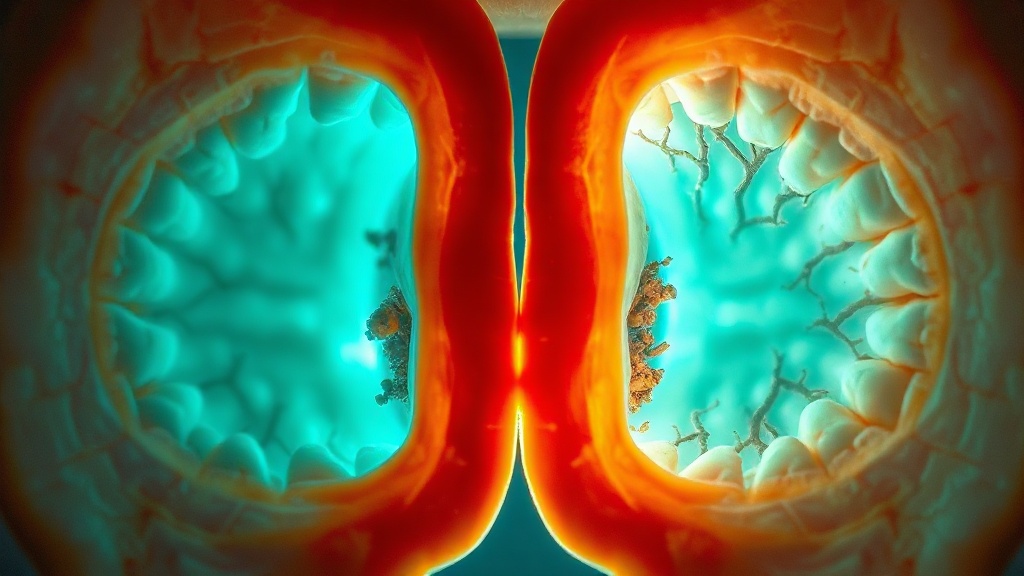 Guides8 min
Cryptic Tonsils: What They Are and Why They Trap Stones
Some tonsils are simply built with deeper, more folded pockets — here is what cryptic really means, why those crypts collect stones and odour, and how to manage them without chasing a cure.
Read →→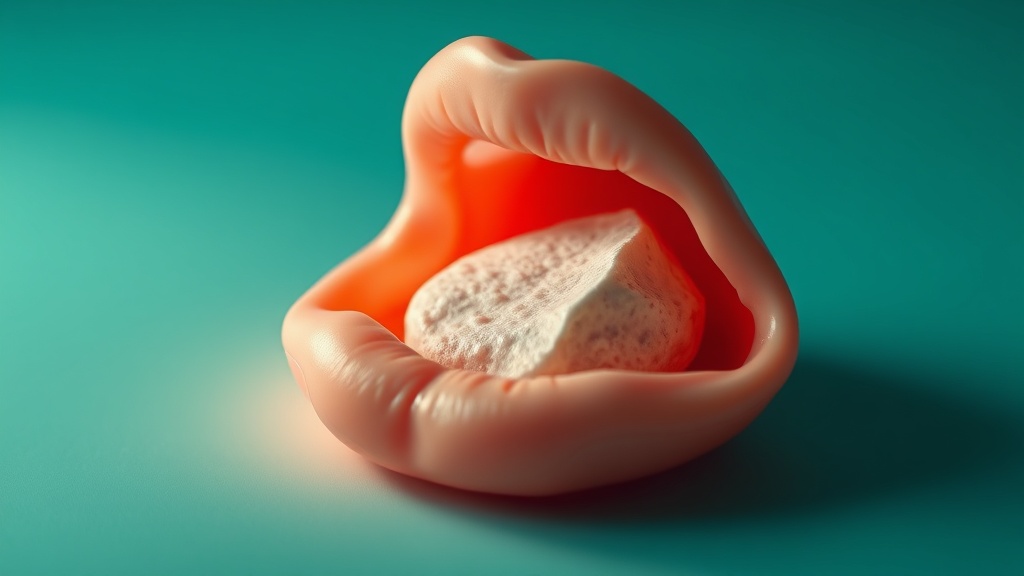 Answers8 min
Can Tonsil Stones Make You Sick? An Honest Look
A calm, honest look at whether tonsil stones can actually make you unwell, the local nuisances they do cause, and the red flags worth taking seriously.
Read →→ Answers8 min
Can a Dentist Remove Tonsil Stones? Your Professional Options
Who actually removes tonsil stones, the in-office options from simple expression to crypt reshaping, and how to know when a professional is worth it.
Read →→