Why Is My Mouth Always Dry? An Evidence-Based Answer
The most common reasons a mouth stays dry, what the research shows, and the practical first moves — without guesswork or scare tactics.

- A mouth that is always dry almost always has a findable reason — it is a signal to investigate, not a fixed fact you have to live with.
- Medications are the single most common everyday cause: dozens of drug classes reduce saliva, and dry mouth is a top side effect of many of them.
- Feeling dry and actually making less saliva are not the same thing; the two diverge in roughly half of people, which changes what actually helps.
- Mouth-breathing, too little fluid, alcohol and caffeine, aging combined with several medicines, and stress can each keep the mouth dry — often more than one at once.
- If dryness is constant, or comes with dry eyes, trouble swallowing, or a new medicine, see a dentist or doctor — and never stop a prescribed drug on your own to chase relief.
Your mouth is probably always dry because something is lowering saliva or drying the tissues faster than saliva can keep up — most often a medication, mouth-breathing, low fluid intake, or a medical cause such as Sjogren or diabetes. A constant dry mouth is worth a professional assessment rather than guesswork.
What always dry actually means
There are two different things going on under the phrase dry mouth, and telling them apart matters. Xerostomia is the subjective feeling of dryness. Hyposalivation is a measured drop in how much saliva you actually make. They sound like the same problem, but in studies they part ways in roughly half of cases: you can feel bone-dry with near-normal flow, or have genuinely low flow without much complaint. That is not a contradiction — the sensation depends on the thin film of saliva coating your tissues, its quality, and how fast it evaporates, not just the raw volume your glands produce. Saliva is doing a lot of quiet work: lubricating speech and swallowing, buffering acids, and keeping the mouth comfortable. When the film thins — because production drops, or because it is drying off faster than it is replaced — the tongue starts to stick, the mouth feels sticky or raw, and you reach for water. Understanding which side of this you are on is useful, because a mouth that feels dry with normal flow often responds best to coating and moisture, while genuinely low flow points you toward the cause reducing it — very often a medicine.
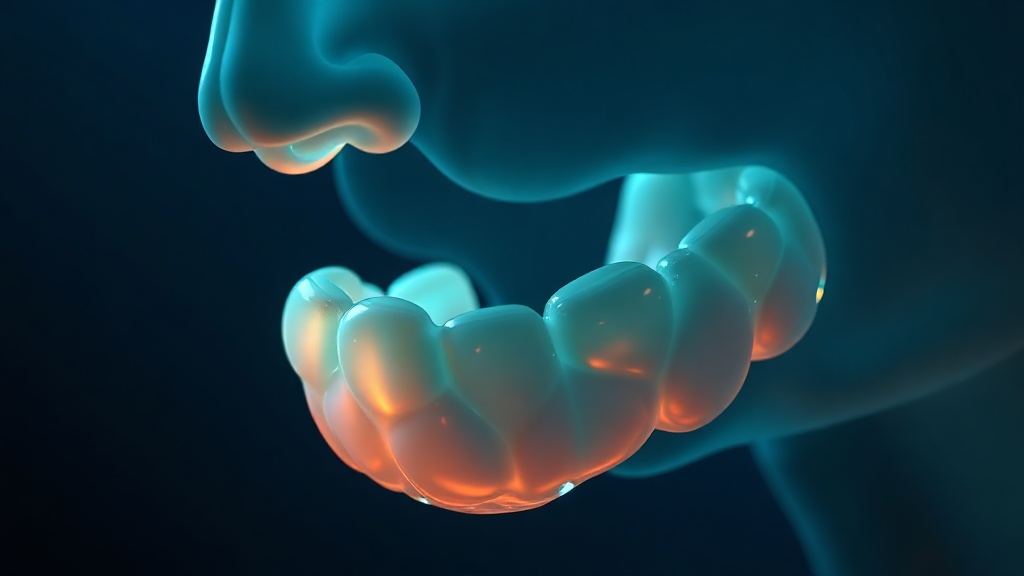
The dry feeling depends on the thin film of saliva coating your tissues — not just the raw volume your glands make.
What the research actually shows
Every claim below maps to a named, peer-reviewed source in the Sources section. According to PubMed.
| Claim | Evidence | Source |
|---|---|---|
| Medications are the single most frequently reported cause of a dry mouth — the first thing to consider when it is constant. | Widely cited clinical review of xerostomia etiology and management. | Guggenheimer & Moore, 2003 |
| At least 56 substances have higher-level evidence of causing salivary dysfunction, spanning most major drug classes — so many everyday prescriptions can be the culprit. | Systematic review of medications inducing salivary gland dysfunction (WWOM VI). | Wolff et al., 2017 |
| Feeling dry and measuring low saliva flow diverge in about half of people, so a dry sensation does not automatically mean your glands have failed. | Review of the distinction between xerostomia and hyposalivation. | Vistoso Monreal et al., 2022 |
| Aging mainly reduces resting saliva from the submandibular glands, while the parotid reserve is largely preserved — so age alone rarely explains a constantly parched mouth. | Meta-analysis of salivary flow in younger versus older adults (47 studies). | Affoo et al., 2015 |
| Breathing through the mouth significantly lowers measured oral moisture and worsens the dryness score — a common, fixable driver of a persistently dry mouth. | Direct human measurement of oral moisture during mouth versus nasal breathing (p=0.001). | Oto et al., 2013 |
The usual suspects behind a constantly dry mouth
| Common reason | Why the mouth feels dry | Sensible first move |
|---|---|---|
| A medication or several | Many drug classes reduce saliva as a side effect | List your medicines and ask the prescriber |
| Mouth-breathing (often a blocked nose) | Air dries the saliva film faster than it is replaced | Address nasal congestion; notice daytime breathing |
| Not enough fluid, plus caffeine or alcohol | Less water in and more drying drinks out | Steady water through the day; moderate both |
| Aging combined with polypharmacy | The medication load, more than age itself, lowers flow | Medication review with your doctor |
| Stress or anxiety | The fight-or-flight response briefly suppresses saliva | Notice the pattern; manage the stressor |
| A medical cause (Sjogren, diabetes) | The condition itself reduces or alters saliva | See a professional for assessment |
Why drinking more water often does not fix it
The most common frustration with a chronically dry mouth is that water helps for a minute and then the dryness returns — and people end up sipping all night and getting up to urinate instead of sleeping. There is a reason for that. Water wets the mouth, but it runs straight off; it does not restore the lubricating, longer-lasting film that real saliva provides, and it does nothing about whatever is lowering your saliva in the first place. If the driver is a medication, no amount of water changes the drug effect. If it is mouth-breathing, the air keeps drying the film as fast as you replace it, which is exactly why the problem is often worst overnight and first thing in the morning. That is also why a plain glass of water underperforms a coating product for many people: gels, sprays and sugar-free gum either lay down a film that clings or nudge your own glands to work, both of which outlast a swallow of water. None of this means water does not matter — staying hydrated is still sensible groundwork. It means water is rarely the whole answer, and a mouth that stays dry despite good hydration is telling you to look for the underlying cause rather than simply drink more.
Evidence you can act on.
Occasional emails — new research, new protocols, no noise.
What to do about a mouth that is always dry
These steps help you find the cause and stay comfortable while you do. They do not treat a disease, and they are not a substitute for a professional assessment if dryness is constant.
- 1
Write down every medicine and supplement
10 minutesBecause medications are the most common cause, a simple list — prescriptions, over-the-counter drugs, and supplements — is the single most useful thing you can bring to a dentist or doctor. Note when the dryness started relative to any new drug. Do not change or stop anything yourself; that is a conversation for your prescriber.
- 2
Check how you are breathing
a few days of noticingIf you wake with a parched mouth, you may be breathing through your mouth overnight, often because your nose is blocked. Managing allergies or congestion and favouring nasal breathing where you can reduces how fast the saliva film dries off. Persistent nasal blockage is worth raising with a clinician.
- 3
Steady your fluids and ease the drying drinks
dailySip water through the day rather than in big gulps, and go easy on caffeine and alcohol, both of which leave the mouth drier. This is groundwork, not a cure — if the mouth stays dry despite good hydration, that is a clue the cause lies elsewhere.
- 4
Add a comfort layer that outlasts water
as neededA moisturizing gel, a saliva-substitute spray, or sugar-free xylitol gum tends to relieve dryness better than water because it coats the tissues or stimulates your own flow. Use these for comfort while you work out the underlying reason with a professional.
- 5
Get it assessed if it is constant
book a visitA mouth that is always dry — especially with dry eyes, trouble swallowing, or a new medication — deserves a proper look. A dentist or doctor can check your saliva, review your medicines, and consider medical causes such as Sjogren or diabetes, and protect your teeth with fluoride while you sort out the cause.

Because medications are the most common cause, a list of everything you take is the most useful thing to bring to a dentist or doctor.
Book an appointment if your dry mouth is constant, if it comes with dry eyes, difficulty swallowing, mouth sores, or a burning tongue, or if it started after a new medication. Dryness with dry eyes together is a particular reason to be assessed. A dentist or doctor can measure your saliva, review your medicines, look for causes such as Sjogren or diabetes, and set up fluoride protection for your teeth. Reviewing or changing any prescription is their decision — never stop a medicine on your own to relieve dryness.
Frequently asked questions
Sources
- 1.
- 2.
- 3.
- 4.
- 5.
- 6.
- 7.
- 8.
- 9.

Fix your breath at the source.
The complete science-backed protocol — engineered to eliminate volatile sulfur compounds at the biological source.
Start the Breath Protocol →Related reading
Educational purposes only. The content on this page is not medical advice and is not a substitute for consultation with a qualified dental or medical professional.
More from the library
 Guides8 min
What Causes Dry Mouth? The Common Triggers, Explained
Dry mouth almost always has an identifiable trigger, and knowing yours is the first step toward relief.
Read →→ Causes8 min
Adderall Tongue: Why Stimulant Medication Dries Out Your Mouth
The honest science behind the dry, sticky, sometimes sore tongue that so often comes with stimulant medication for ADHD.
Read →→ Guides8 min
Dry Mouth at Night: Why It Happens and How to Sleep Easier
Nighttime dryness is common because your saliva naturally slows while you sleep, and a few targeted habits can make a real difference.
Read →→ Answers8 min
Can You Cure Dry Mouth? What Actually Helps
Dry mouth is usually a symptom, not a disease — here is why it is managed rather than cured, and the realistic steps that bring relief.
Read →→ Guides8 min
How to Fix Dry Mouth: An Evidence-Based Guide
Dry mouth is usually manageable once you know what is driving it and which supportive habits actually move the needle.
Read →→ Best Of8 min
Best Mouthwash for Dry Mouth: What to Look For
The best dry-mouth rinse is the one that soothes without drying, and the label tells you more than the marketing.
Read →→