Does Everyone Get Tonsil Stones?
What the prevalence research really says about how many people get tonsil stones, why anatomy and age decide it, and why it is rarely anything to worry about.

- No — not everyone gets tonsil stones, but they are far more common than most people assume, showing up in roughly one in seven to one in three people when sensitive imaging is used.
- The single biggest reason some people get them and others never do is anatomy: deeper, more branched tonsil crypts trap debris, while shallow, smooth ones self-clear.
- Age is the most consistent driver — prevalence rises steadily decade by decade, peaking in the 50s and 60s in the largest scan studies.
- A past history of tonsillitis is the one factor that turns up again and again as a genuine correlate; sex, by contrast, makes little consistent difference.
- Even among people who get them, most stones are small, silent and self-clearing — so having tonsil stones is common, usually harmless, and rarely a sign that anything is wrong.
No, not everyone gets tonsil stones, but they are very common. Sensitive CT scans find them in roughly one in seven to one in three people, depending on the study and the imaging used. They become more likely with age and with deeper tonsil crypts, and most are small, painless and clear on their own.
How common tonsil stones really are
The honest answer to whether everyone gets tonsil stones is a clear no — but the real number is higher than most people would guess, and it depends almost entirely on how you look. The dominant factor in every prevalence study is the imaging used. Sensitive CT scans pick up tiny stones that ordinary dental X-rays miss entirely, so the figures span a wide range. The largest CT series, covering nearly 3,900 people, found tonsil stones in about 30% of them, averaging 2.7 per person. Another large scan study put the figure near 40%, while others land closer to 14%, or around one-quarter of those examined. Pooling these, the fair headline is that roughly one in seven to one in three people carry at least one tonsil stone at any given time — most of them small, and most causing no symptoms whatsoever. What almost none of these studies show is a clean split between people who get them and people who never could. Crypts are a normal feature of everyone tonsils, so in principle almost anyone with tonsils can form a stone. The difference is how readily a particular anatomy traps and holds debris — which is why the honest phrasing is not everyone, but far more people than you would think.

On sensitive CT imaging, roughly one in three people show at least one tonsil stone — common, but far from universal.
What the research actually shows
Every claim below maps to a named, peer-reviewed source in the Sources section. According to PubMed.
| Claim | Evidence | Source |
|---|---|---|
| Tonsil stones appeared on about 30% of CT scans, averaging 2.7 per person, and became more common with age. | Largest CT prevalence series (n=3,886). | Kim et al., 2018 |
| A separate large scan study found tonsil stones in 39.9% of people, most commonly between the ages of 50 and 69. | CT review of 2,873 consecutive patients. | Takahashi et al., 2014 |
| Prevalence tracks strongly with age (correlation r=0.812) and showed no meaningful difference between the sexes. | Head and neck CT series (n=2,710). | Yu et al., 2017 |
| About one-quarter of those imaged had tonsil stones, and nearly half of those had them on both sides. | CT examination series (n=150). | Fauroux et al., 2013 |
| In a population with much lower prevalence (5.85%), a prior history of tonsillitis was the only factor significantly linked to having tonsil stones. | Cohort of 209 adults. | Aragoneses et al., 2020 |
Who is more, and less, likely to get them
| Factor | Effect on likelihood | Can you change it? |
|---|---|---|
| Deeper, more branched tonsil crypts | More likely — more places for debris to lodge and stay | No — it is your anatomy |
| Getting older | More likely — prevalence rises steadily with age | No |
| A history of tonsillitis | More likely — the most consistent single correlate | No, but worth noting to a clinician |
| Shallow, smooth crypts | Less likely — debris tends to self-clear | No |
| Having the tonsils removed | Removes the pockets stones form in | A medical decision, not a first step |
Why some people get them and others never do
If tonsil stones are so common, why do some people get them constantly while others go a lifetime without noticing one? The answer is mostly built into the tonsils themselves. People with deeper, more branched crypts simply have more pockets, more surface and more shadow for debris to settle into and stay, and that architecture does not change over a lifetime. On top of anatomy, two patterns show up consistently in the research. The first is age: prevalence climbs steadily decade by decade, and in one large study the correlation between age and having tonsil stones was strikingly strong. The second is a history of tonsillitis — in a population where overall prevalence was low, prior tonsillitis was the single factor that stood out as a genuine correlate, probably because past inflammation can leave crypts that trap more material. Notably, sex makes little consistent difference; studies that looked for a male or female skew mostly did not find a firm one. What none of this means is that getting tonsil stones is a personal failing or a hygiene problem. It is largely the luck of your anatomy plus the passage of time — which is also why the goal is never to cure them, only to keep the pockets tidy when they do form.
Evidence you can act on.
Occasional emails — new research, new protocols, no noise.
If you are one of the people who get them
Getting tonsil stones is common and rarely a problem, but if your anatomy makes them recur, a light routine keeps them from building up. None of this treats a disease — it simply keeps the crypts clear.
- 1
Clear the crypts gently and regularly
under a minute dailyA gentle, low-pressure water rinse aimed at the tonsil area is the most sensible tool; a single irrigation cycle has been shown to lower the sulfur gases behind the odour. Keep the pressure low to avoid bruising the tissue.
- 2
Protect your saliva
all daySaliva is the mouth built-in rinse, and a dry mouth lets debris sit and accumulate. Sip water through the day, especially after coffee or alcohol, and breathe through your nose where you can.
- 3
Keep the overall bacterial load down
twice dailyThorough brushing, flossing and an alcohol-free rinse lower the general population of odour-producing bacteria. This supports the whole environment, though it cannot reach inside a crypt, so it works alongside gentle clearing, not instead of it.
- 4
Let time and movement help
ongoingMost stones drift toward the throat opening and work loose on their own, and a share disappear entirely. Recurrence is normal for certain anatomies and is not a sign of doing anything wrong.
- 5
Never gouge with sharp tools
—Digging at a tonsil with a metal pick, bobby pin or fingernail risks puncturing the tissue, bleeding and infection. If a stone will not release gently, leave it — most work loose on their own — or see a professional.
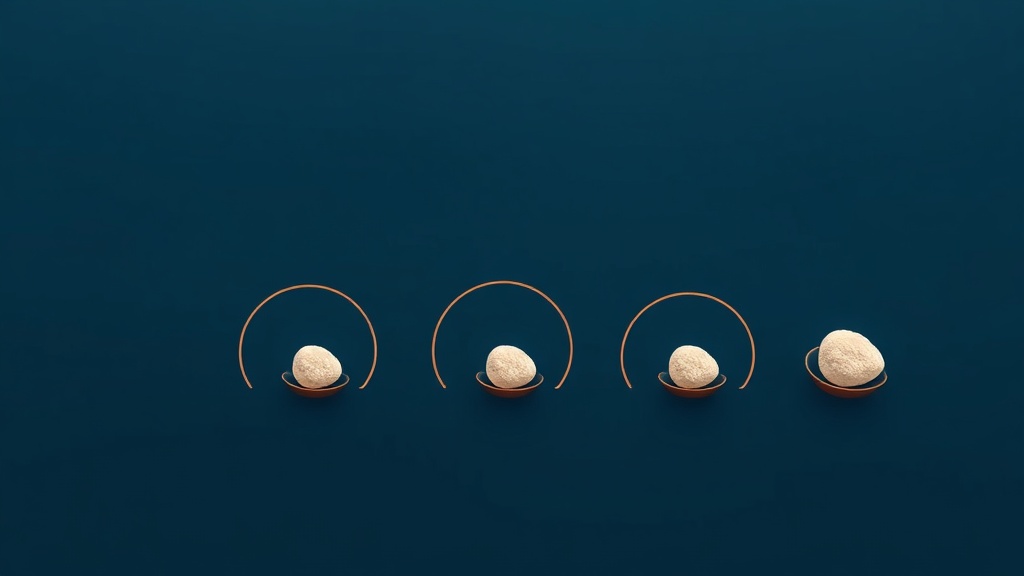
Deeper crypts and older age both raise the odds — which is why some people form stones readily and others rarely do.
For the great majority, tonsil stones are a common and harmless finding. See a dentist or an ENT if one tonsil is visibly larger than the other and stays that way, if swallowing becomes genuinely painful, if you have persistent ear pain, or if there is any bleeding. Lasting one-sided tonsil enlargement in particular should always be assessed in person, because a persistent asymmetry needs a professional to rule out other causes rather than being self-treated.
Frequently asked questions
Sources
- 1.
- 2.
- 3.
- 4.
- 5.
- 6.

Fix your breath at the source.
The complete science-backed protocol — engineered to eliminate volatile sulfur compounds at the biological source.
Start the Breath Protocol →Related reading
Educational purposes only. The content on this page is not medical advice and is not a substitute for consultation with a qualified dental or medical professional.
More from the library
 Answers9 min
Are Tonsil Stones Normal? The Honest, Reassuring Answer
Why tonsil stones are one of the most common things people are quietly embarrassed about - and how to tell an ordinary stone from the rare sign worth checking.
Read →→ Causes8 min
How Do Tonsil Stones Form? The Biology, Honestly Explained
The unglamorous truth about what a tonsil stone is, how it builds up in the folds of your tonsils, and why the crypts that make them are simply part of your anatomy.
Read →→ Answers8 min
Do Tonsil Stones Go Away on Their Own? What the Imaging Shows
The reassuring, evidence-based answer to whether tonsil stones resolve by themselves, drawn from studies that scanned the same people twice.
Read →→ Guides8 min
What Are Tonsil Stones? The Complete, Honest Guide
A plain-English, evidence-based look at what tonsil stones really are — and why they are far more common, and far less alarming, than they look.
Read →→ Answers8 min
Can Tonsil Stones Make You Sick? An Honest Look
A calm, honest look at whether tonsil stones can actually make you unwell, the local nuisances they do cause, and the red flags worth taking seriously.
Read →→ Answers8 min
Can a Dentist Remove Tonsil Stones? Your Professional Options
Who actually removes tonsil stones, the in-office options from simple expression to crypt reshaping, and how to know when a professional is worth it.
Read →→